The Short Answer
Long Island winters damage paint in three ways: salt film that dulls and etches the clear coat, sand and gravel that chip the paint at highway speed, and bad winter washing habits that grind that grit into swirl marks. None of these are dramatic on day one. The damage builds up from December to March and shows up in spring.
The fix is to protect the paint before the first salt goes down, keep the salt off it during the season, and correct whatever got through once the roads are clean again.
What Winter Actually Does to Your Paint
Salt film sits on the clear coat for months
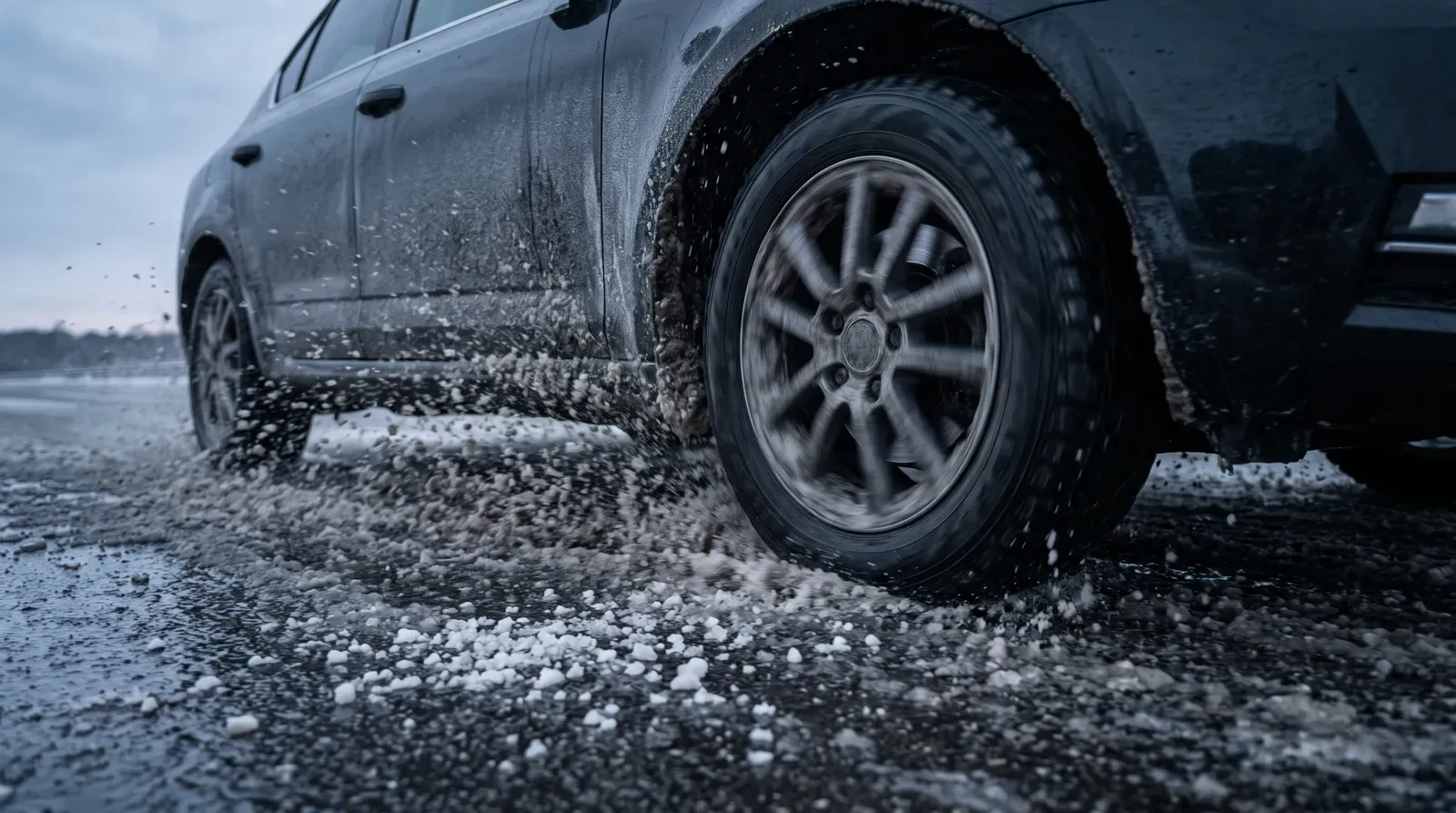
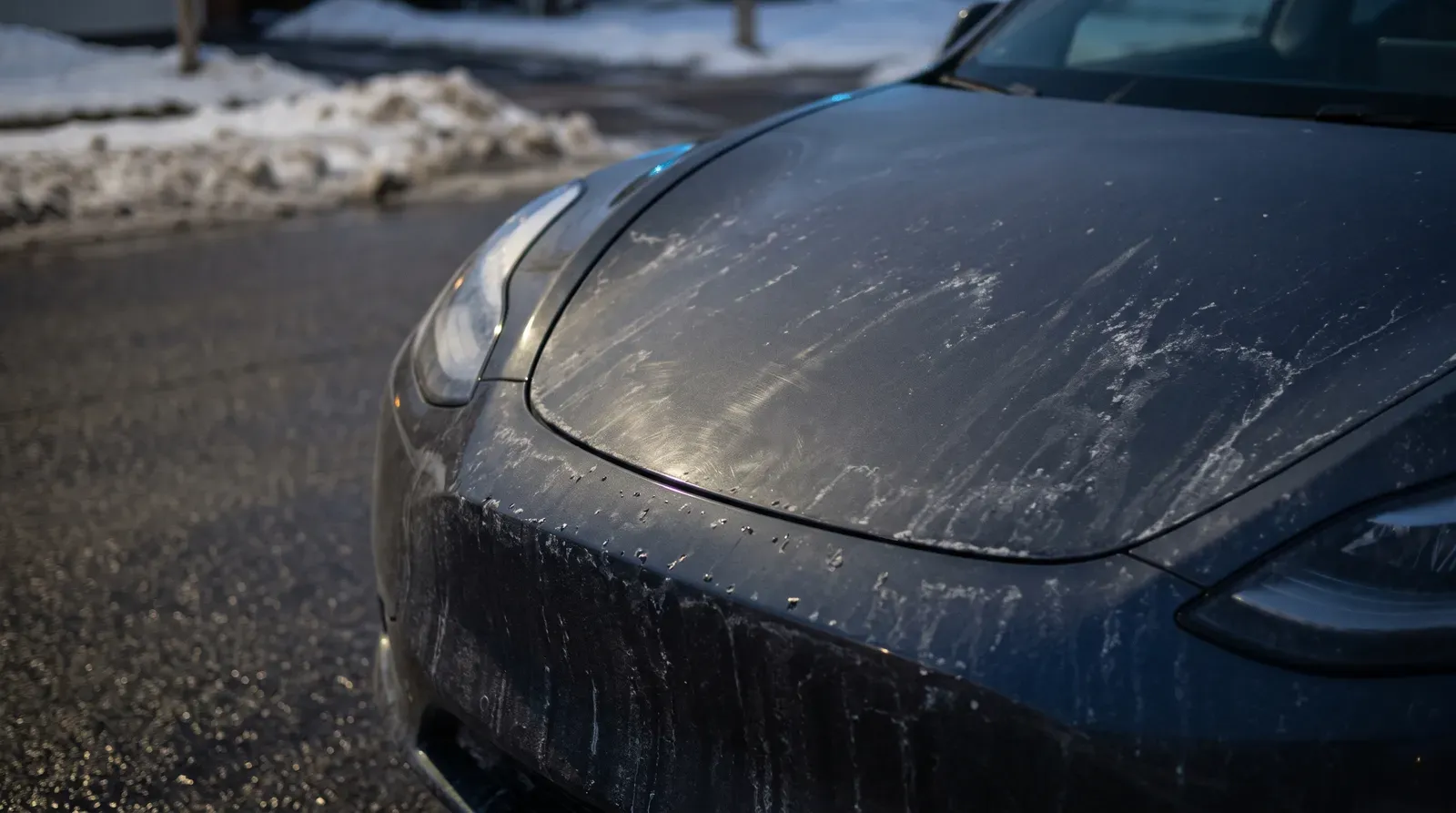
Every time the roads are treated, the car picks up a fine layer of salt and road grime. It dries to the white haze you see on every car on the LIE in January. Salt holds moisture, so that film keeps the surface damp long after the road has dried.
On healthy clear coat, the result is gradual: a dull, flat look, water spots that will not wash off, and light etching where salty water dried on the paint over and over. On any area where the clear coat is already broken, it is worse. We cover what salt does underneath the car in our post on road salt damage to your undercarriage.
Sand and gravel turn into rock chips
Towns and the state mix sand and abrasives into the treatment to give tires grip. Everything on the road gets thrown up by the car in front of you, and at 55 to 65 mph, coarse sand works like a sandblaster on the bumper, hood, and mirrors.
This is why a car can come out of a single winter with dozens of new chips on the front end. Plowed shoulders and the potholes that open up in late winter add more loose debris to the mix.
Chips let salt reach bare metal
A chip is a small cosmetic problem in July. In February it is an entry point. Once a chip goes through the clear coat, base coat, and primer, salt water sits directly on steel. Rust starts in the chip and creeps sideways under the surrounding paint, which is how a pinhead chip turns into a bubbled patch by the following year.
Freeze and thaw cycles make it worse. Water gets into the edge of the chip, freezes, expands, and lifts a little more paint each time.
Winter washing creates swirl marks
Most winter paint damage is not from the road. It is from how the car gets cleaned.
- Brush tunnel washes drag salt and sand across every panel.
- Snow brushes and ice scrapers pull grit across the paint while clearing snow.
- Wiping off salt haze with a dry towel or a glove is the same as wet sanding with a very fine grit.
The result is a web of fine scratches that shows up the first sunny day in spring. On dark paint it can make a two-year-old car look ten years old.
Cold makes the clear coat less forgiving
Clear coat is less flexible in deep cold, so an impact that would leave a small mark in summer is more likely to crack or chip in January. Washing the car with hot water on a freezing day, or blasting ice off with a pressure washer up close, puts extra stress on the paint for the same reason.
Which Panels Take the Worst of It?
Damage is not spread evenly across the car:
- Front bumper and hood: rock chips from sand and gravel, the highest impact zone on the car
- Rocker panels and lower doors: constant salt spray from your own tires, and chips from kicked-up debris
- Behind the wheels: the leading edge of the rear quarter panels takes spray from the front tires
- Side mirrors: sandblasted by wind-carried grit at highway speed
- Roof and trunk: snow brush scratches from clearing snow
If you know where it lands, you know where protection is worth the most.
How to Protect Your Paint Before Winter
Decontaminate and correct first
Any protection you put on seals in what is already there. Before winter, the paint should be washed, decontaminated with an iron remover and clay, and corrected if it has swirls or etching. Trapping summer contamination under a coating gives you a protected but still damaged finish. Our guide to paint correction levels explains how much correction most cars actually need.
Ceramic coating for the salt and the washing
A ceramic coating is the most practical winter protection for the whole car. It does three useful things in a Long Island winter:
- Salt has a harder time bonding. Salt film sits on top of the coating instead of on the clear coat, and it rinses off with much less effort.
- Washing takes less contact. Most of the grime comes off with a pre-rinse and foam, so you are not scrubbing grit into the paint.
- It resists chemical etching. Salt and road chemicals attack the coating first, not the clear coat underneath.
What a ceramic coating will not do is stop rock chips. It is a hard, thin layer, not an impact barrier. If you are deciding between protection types, our comparison of ceramic coating vs wax covers why a wax or sealant will not last through a full winter of salt.
PPF for the front end
Paint protection film is the only thing that actually stops winter rock chips. The urethane film takes the impact, and the paint underneath stays intact. That also means no open chips for salt to get into, which is the root of most winter rust on painted panels.
For winter driving, the panels that matter most are the bumper, the full hood, the fenders, and the mirrors, which is the full front package. Rocker panels are also worth considering if you drive a lot of salted miles. Our breakdown of clear bra vs full front PPF covers what each option protects.
The best setup for a car that sees a full Long Island winter is PPF on the front end with ceramic coating over the entire car, film included.
Seal any chips you already have
If the front end already has chips down to metal, get them touched up before the salt arrives. A touch-up is not invisible, but it closes the metal off from salt water, and that is what matters for the next four months.
How to Care for Your Paint During Winter
Protection only works if the salt gets washed off regularly. A few habits make most of the difference:
- Wash every one to two weeks while roads are being salted, on a day above freezing.
- Pre-rinse thoroughly before anything touches the paint, so the grit comes off with water instead of a mitt.
- Use two buckets and a clean mitt, or a foam pre-wash, not a brush wash.
- Rinse the lower panels and wheel wells even when you do not have time for a full wash.
- Use a foam snow broom, not a bristle brush, and push snow off instead of scrubbing.
- Never wipe dry salt haze off with a towel or your sleeve. Rinse it.
- Dry door seals and jambs after washing so they do not freeze shut.
If a full wash is not possible in the middle of a cold snap, a touchless wash to get the salt off is better than leaving it on for three weeks.
What to Do in Spring
Once the roads stop getting treated, the winter damage can be assessed and corrected. A spring decontamination removes the bonded salt and iron particles, and paint correction removes the swirl marks and light etching that built up over the season. Our spring detailing checklist walks through the full process step by step.
If the car went into winter with ceramic coating and PPF, spring is usually a thorough wash and a maintenance inspection. If it went in unprotected, spring is usually paint correction followed by protection, so next winter goes better.
The Bottom Line
Long Island winters do not destroy paint in one storm. They wear it down through salt film, sand chips, and gritty washes, over and over for four months. The cars that come out of winter looking good are the ones that went in corrected and protected, and got the salt rinsed off regularly.
Book your protection in the fall, before the first storm. Request a quote and tell us the vehicle, how much highway driving you do, and whether it is parked inside or out. We will look at the paint and recommend the protection that fits how you drive, not the biggest package on the list.
Frequently Asked Questions
Does road salt damage car paint?
Yes, but usually not overnight. Salt is a corrosive that holds moisture against the surface. On intact clear coat it mostly causes dulling, water spotting, and etching if it is left on for weeks. The real damage happens where the clear coat is already broken, at rock chips and deep scratches, because salt water reaches bare metal there and rust starts underneath the paint.
How often should I wash my car in winter on Long Island?
Every one to two weeks while the roads are being salted, and soon after any storm where the car was driven on treated roads. Wash on a day above freezing so water does not refreeze in door seals and locks. A rinse that removes the salt film is far better than waiting until spring for a full wash.
Are automatic car washes bad for paint in winter?
Brush and soft-cloth tunnel washes drag grit across the paint, and in winter that grit is coarse sand and salt. That is how a car picks up heavy swirl marks between December and March. A touchless wash is a reasonable option for removing salt between proper hand washes, but it will not clean as thoroughly and it uses strong chemicals.
Is it too late to ceramic coat my car before winter?
Not if the car can stay indoors and dry for the cure period. Ceramic coating needs the paint clean, corrected, and above a minimum temperature while it cures, which is why it is done in a climate-controlled studio. As long as the install happens before the car sees salted roads, the coating is protecting it for the whole season.
Should I fix rock chips before winter or wait until spring?
Before winter, if you can. A chip that goes through to bare metal is the one spot on the panel where salt water reaches steel directly. Over a winter that chip can start rusting and the rust spreads under the surrounding paint. Even a basic touch-up to seal the metal is better than leaving it open until April.