The Short Answer
Road salt does most of its damage where you never look: underneath the car. Once salt hits a wet road it turns into salt water, and your tires spray it into every seam, cavity, and crevice under the vehicle. There it sits on the steel that has no paint protecting it: frame rails, brake and fuel lines, rocker panels, suspension hardware, and exhaust components.
Undercarriage damage is the expensive kind of winter damage. Paint problems are cosmetic and usually correctable. Rusted brake lines, rotted rockers, and seized suspension bolts are repairs, and some of them are safety issues.
How Road Salt Gets Under Your Car
Salt is spread on Long Island roads to melt snow and ice and keep them from bonding to the pavement. On the LIE, Sunrise, and Veterans Memorial Highway, the trucks are out before, during, and after almost every storm.
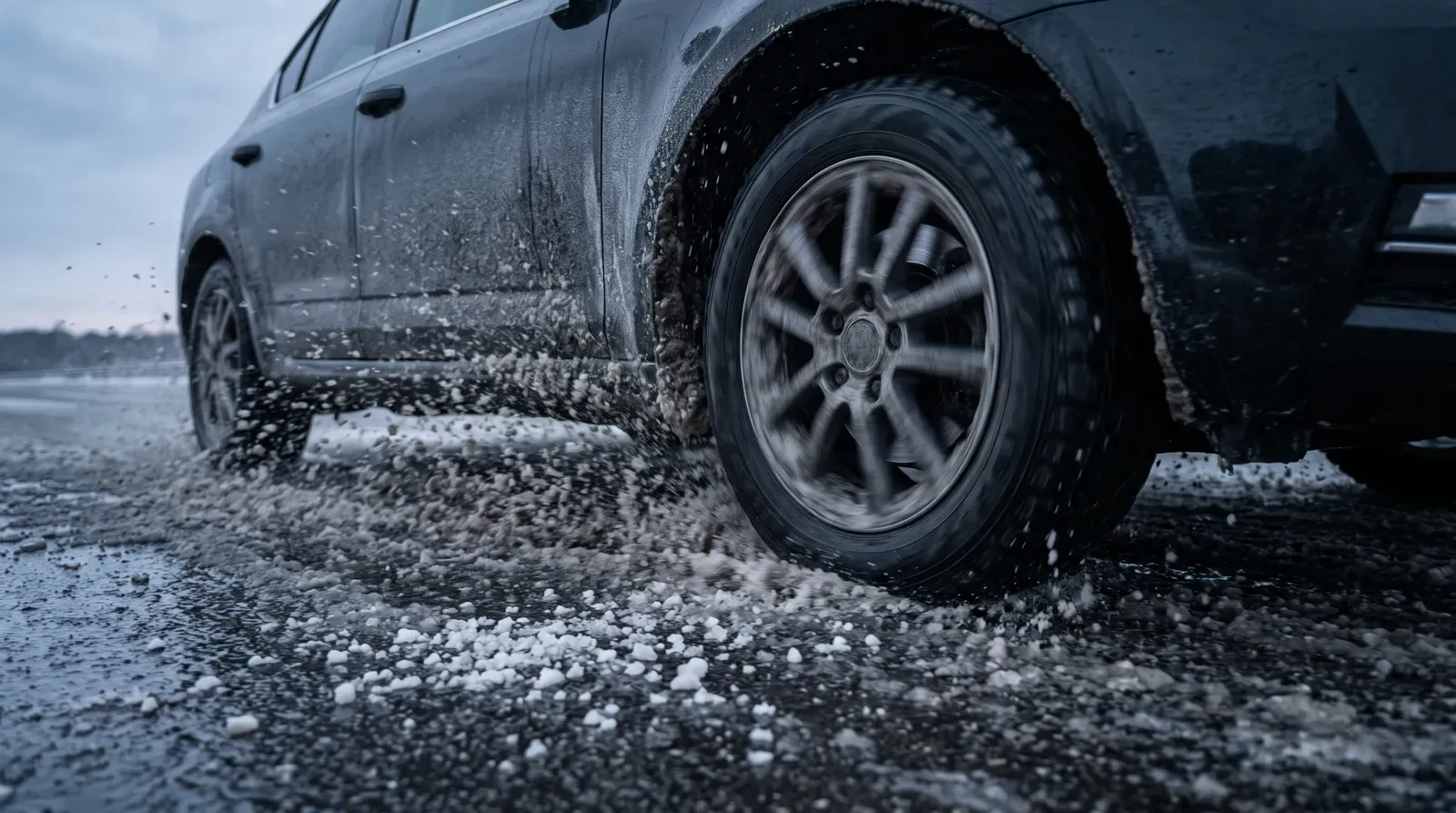
Dry rock salt mostly bounces off the underside of a car. The problem is that it does not stay dry for long. Snow, rain, and slush dissolve it into salt water, and that is what actually reaches the car. Every tire acts like a sprayer, throwing a fine mist of salt water up into the wheel wells, along the frame, and into the gaps between panels.
It does not stop when the storm does. Salt stays on the road for days afterward, and the slush and puddles it leaves behind keep coating the car on every drive.
Why Road Salt Is So Hard on the Undercarriage
It gets where you cannot see or reach
Salt water gets into pinch welds, the inside of rocker panels, the gaps around brake line clips, and the hollow sections inside the frame rails. Those are exactly the places a quick rinse misses and where moisture stays the longest.
It keeps working after it dries
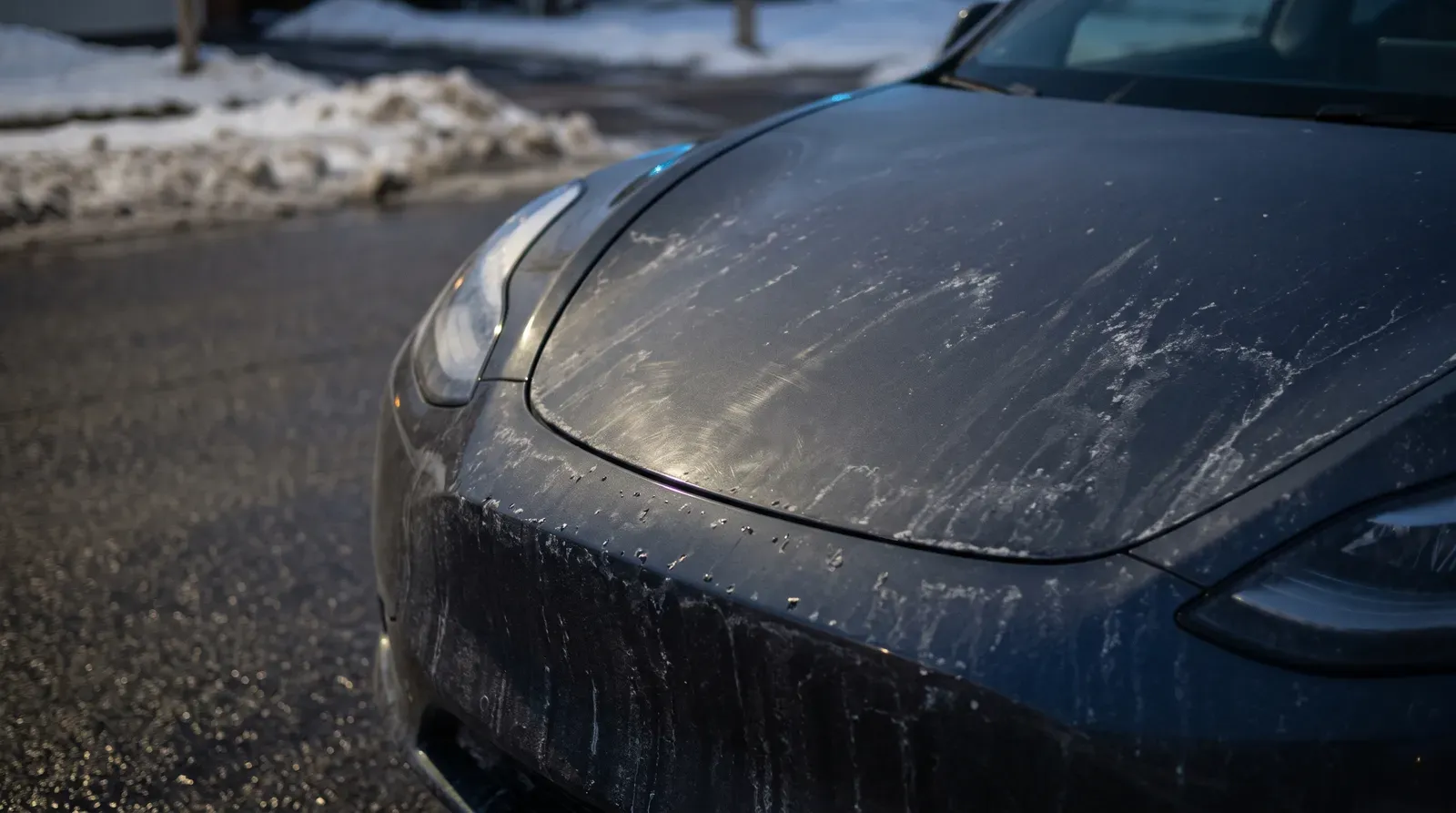
When the salt water evaporates, it leaves the salt behind as a white crust. That crust is not harmless. Salt pulls moisture out of the air, so the next foggy morning, rainy day, or snowmelt turns it back into salt water right where it is sitting. One drive on salted roads can keep working on bare metal for weeks.
The exposure lasts all season
Between the first storm in December and the last one in March, there are very few weeks when a Long Island car is not picking up some salt. The exposure builds up over months, not one bad storm.
Warm days make it worse
Rust forms fastest when metal is wet and above freezing. A Long Island winter swings back and forth around 32 degrees constantly, and every thaw is a stretch of fast corrosion on salt-coated metal. A cold, dry week is actually easier on the underside of the car than a wet 40 degree one.
What Road Salt Does to Each Part of the Undercarriage
Frame rails and subframes
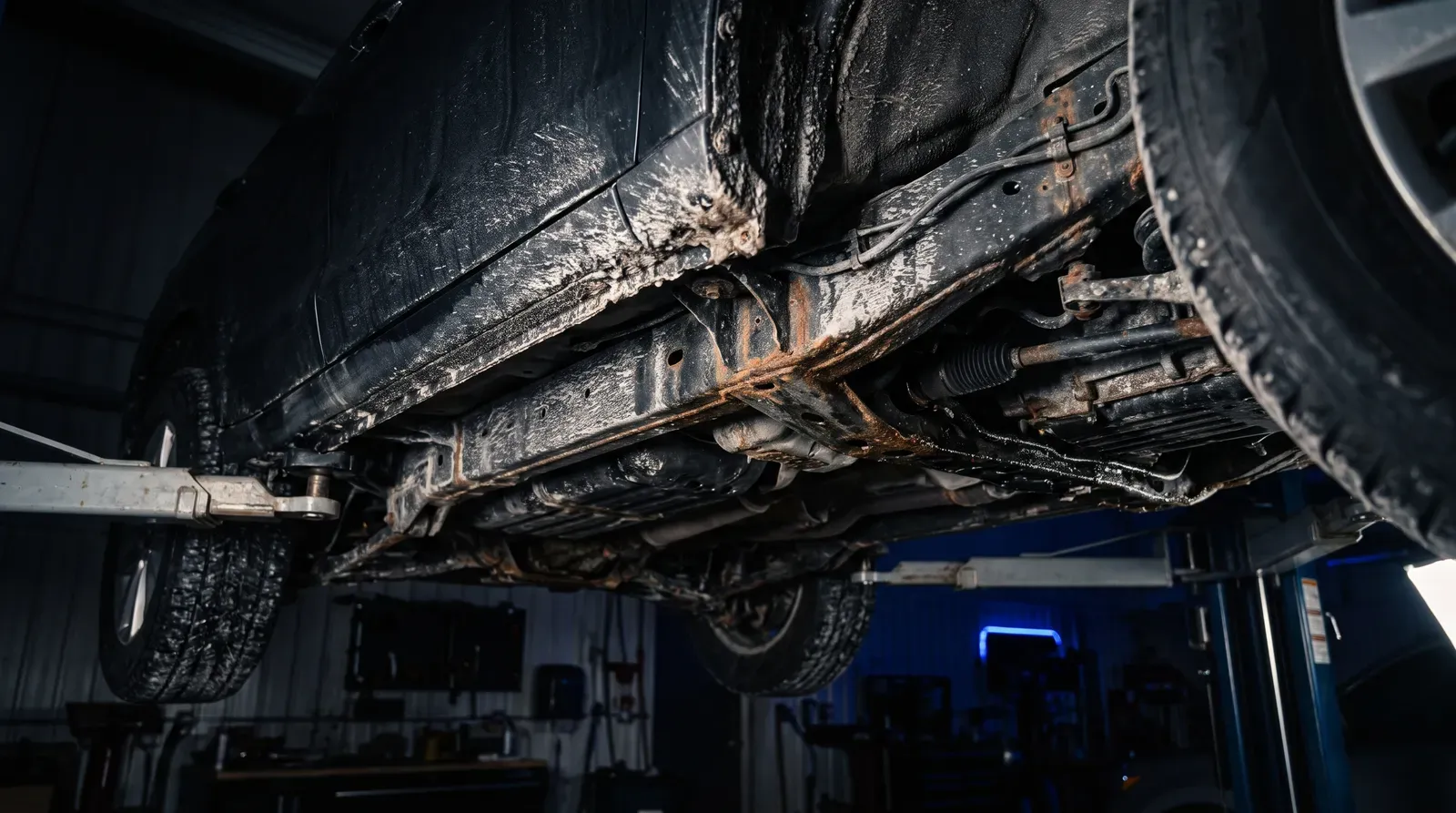
These are the main structural members of the car, and they sit right in the spray from the tires. Salt water collects on the top edges and inside the drain holes, where it stays damp. Surface rust on a frame rail is common. Rust that flakes in layers or leaves holes is a structural problem.
On many modern vehicles, subframes and suspension parts are aluminum. Aluminum does not rust the way steel does, but salt still causes pitting, and corrosion is fastest where aluminum parts bolt to steel ones.
Brake lines and fuel lines
Hard brake lines are thin steel tubes running the length of the car, often clipped tight against the body where salt collects. They corrode from the outside in. A rusted brake line can fail without much warning, which turns a cosmetic problem into a safety one. Fuel lines have the same exposure.
Rocker panels
The rocker panels are the sills below the doors. They are hollow, they trap moisture and debris inside, and they take constant spray from the front tires. Rocker rust usually starts from the inside, so by the time it bubbles through the paint, the metal behind it is often already thin.
Wheel wells and inner fenders
The wheel wells take a direct spray of salt water, sand, and gravel from all four tires. Gravel chips the factory undercoating and exposes bare metal, then salt water reaches it on the next drive.
Suspension hardware and bolts
Control arm bolts, sway bar links, and subframe bolts rust in place. They may hold up fine while driving, but when it is time for an alignment, a brake job, or suspension work, seized hardware turns a routine repair into a much longer and more expensive one.
Exhaust components
Exhaust parts go through a cycle of heating and cooling on every drive, and hot metal coated in salt corrodes quickly. Hangers, clamps, and heat shields are usually the first parts to go.
Brakes and wheels
Salt also coats brake rotors, caliper brackets, and wheel faces. Rotor edges corrode, caliper slides can stick, and salt bonds to brake dust on the wheels. A wheel and caliper coating makes it much easier to rinse salt and brake dust off the wheels during the season.
Signs Your Undercarriage Is Already Taking Damage
- Orange or brown staining on frame rails, subframe, or around welds
- Flaking or layered rust that comes off in pieces when tapped
- Bubbling paint at the bottom of doors, rocker panels, or rear wheel arches
- Crusty brake lines where the coating has turned rough and scaly
- Rattling heat shields or exhaust noise that was not there last year
- A soft or sinking brake pedal, which needs immediate inspection
Light surface rust is normal on any car that has seen a few winters. It is a sign to protect the underside now, before it moves from surface rust to rust that eats through metal.
How to Protect Your Undercarriage
Get it coated before the first storm
Undercarriage rust protection applies a flexible, rubberized coating to the frame rails, floor pan, wheel wells, rocker panels, and exposed metal. It creates a waterproof barrier, so salt water sits on the coating instead of the steel.
Timing is the whole game. A coating applied to clean metal before the first salt exposure is far more effective than one applied over corrosion that has already started. On a new vehicle, before its first Long Island winter is the ideal time. On a used vehicle, it starts with an inspection, a pressure wash, and treatment of any light surface rust, and then the coating goes on.
Rinse the underside regularly
A coating protects, but it does not replace washing. During the salt season:
- Rinse the underside after storms, once the roads have dried and the car is no longer picking up fresh salt.
- Use an undercarriage spray at a car wash every week or two while the roads are being salted.
- Hit the wheel wells and rocker panels with a hose if you are washing at home.
- Do a thorough rinse at the end of winter to flush out what has packed into seams over the season.
Inspect it once a year
Once a year, ideally in spring, get the underside looked at on a lift. Coatings take chips from gravel, and catching a spot of exposed metal early is far cheaper than catching it after another winter.
Do not forget the paint
Salt does not stop at the underside. The same spray hits the lower doors, rocker panels, and rear quarters, and the salt film sits on all of the paint. We cover the paint side of winter in why Long Island winters destroy your paint, and the spring cleanup in our spring detailing checklist.
The Bottom Line
Road salt is a big reason Long Island roads are safer in winter, and a big reason the cars on them rust. Once it turns to salt water it gets into places you cannot see, it keeps working after it dries, and it attacks the bare metal underneath the car where nobody is looking.
The fix is simple and it is all about timing: seal the underside before the first storm, rinse the salt off through the season, and inspect it every spring. Book a free undercarriage inspection and we will put the car on a lift, document its condition, and tell you honestly whether it needs a coating, a treatment first, or nothing at all yet.
Frequently Asked Questions
How does road salt damage the underside of a car?
Once rock salt hits a wet road, it dissolves into salt water. Your tires spray that salt water into every seam, crevice, and cavity under the car, where it sits on bare steel that has no paint protecting it. When it dries it leaves a salt crust that turns back into salt water the next time it gets damp, so it keeps working on the metal long after the storm.
How often should I wash the underside of my car in winter?
Every week or two while the roads are being salted, and after any storm once the roads have dried. An undercarriage spray at a car wash will not remove everything packed into seams and cavities, but it removes a large share of the salt before it has time to work.
Why does my car look white underneath in winter?
That white film is dried road salt. When the salt water your tires throw up evaporates, it leaves the salt behind. It looks harmless when it is dry, but every rainy day, foggy morning, or snowmelt turns it back into salt water right where it is sitting.
When should I get undercarriage rust protection?
Before the first salted roads of the season, and ideally when the vehicle is new. The coating seals bare metal before corrosion starts. It can still be applied to an older vehicle after the underside is inspected, cleaned, and any light surface rust is treated, but heavy structural rust needs to be repaired first.
Can undercarriage coating be applied over existing rust?
Light surface rust can be treated and coated. Coating over active, flaking rust traps moisture and lets it keep spreading under the coating, which is why we inspect and document the underside before any coating is applied. Significant structural rust needs remediation before protection makes sense.