The Short Answer
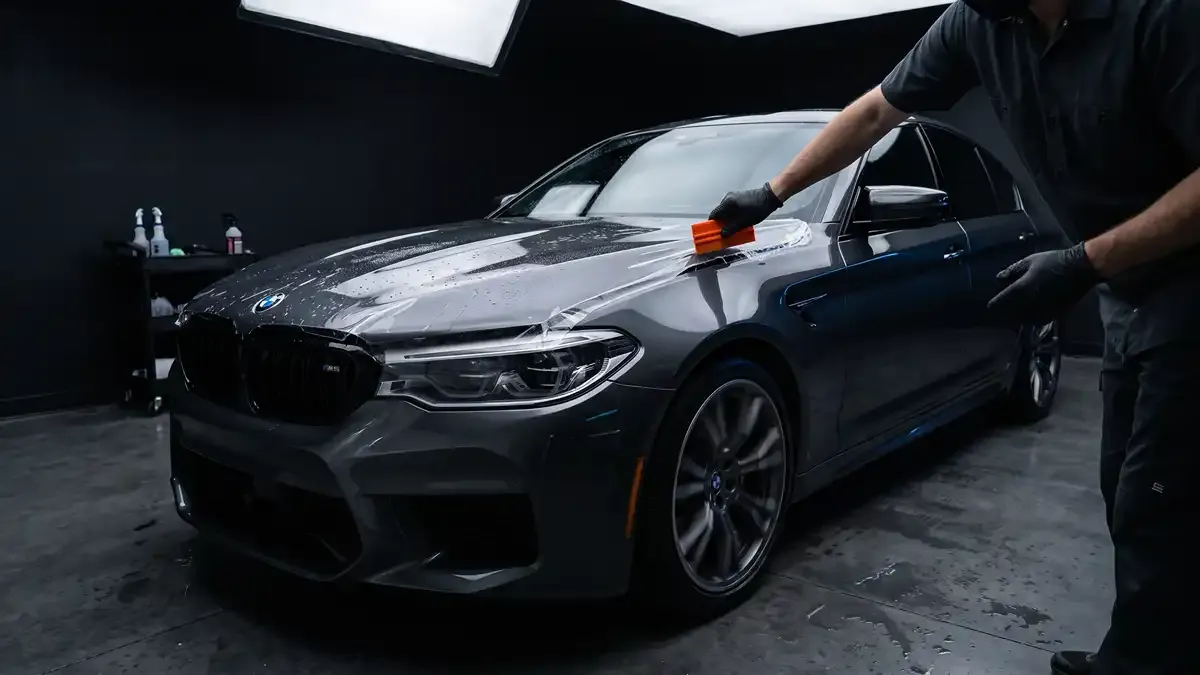
Yes, paint protection film works, and it is not subtle. It is not a coating or a treatment. It is a physical layer of urethane roughly 8 mils thick sitting between your clear coat and the road, and it absorbs damage that would otherwise land in your paint.
But the more useful question is not whether it works. It is where it stops working. So we wrapped a spare hood panel and kept escalating until we found the limit, then peeled the film off to see exactly what got through.
Short version: everything in the range of normal road abuse stayed in the film. The hammer went past it and dented the panel. That is a more useful answer than a clean panel would have been.
Watch the Test

What We Actually Did
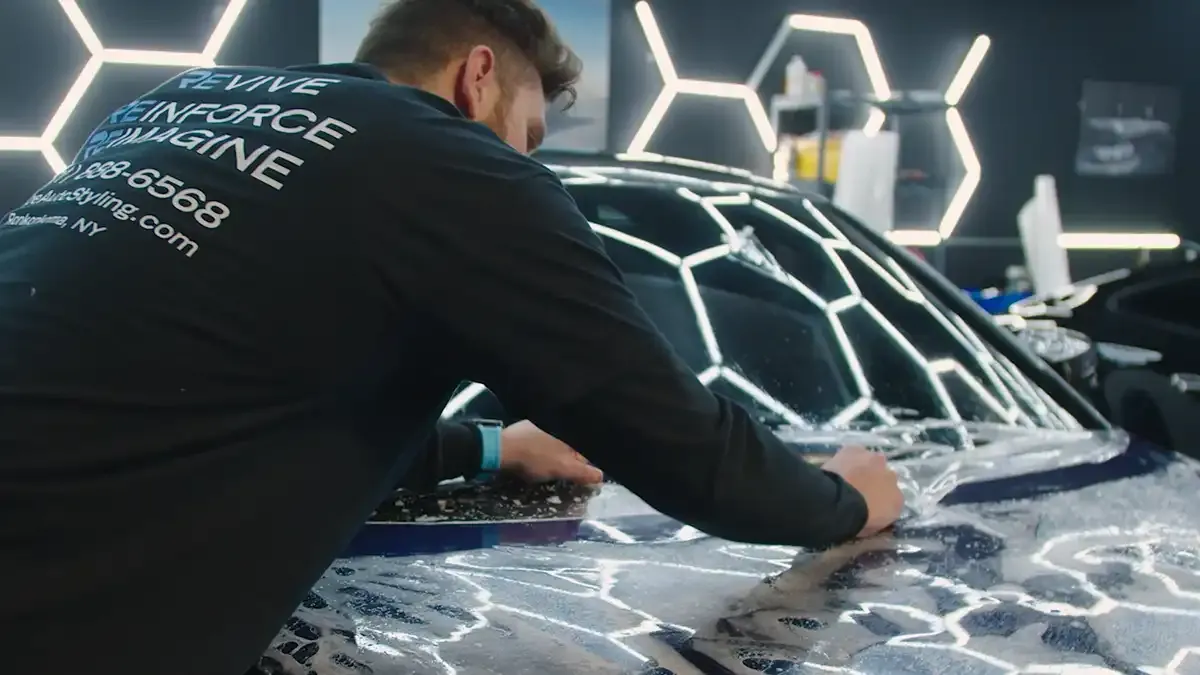
We wrapped a spare hood panel, the kind we keep around the shop for exactly this, and then put it through six things no customer car will ever see:
- Smashed it on the corner of a cinder block wall.
- Stood on it and scraped it across asphalt, using body weight to load the abrasion.
- Banged it against the asphalt.
- Hit it with a hammer. This is the one that matters most, and we come back to it below.
- Dragged a screwdriver across it, gouging under a sharp point load.
- Slid it along the block wall to grind the film against masonry.
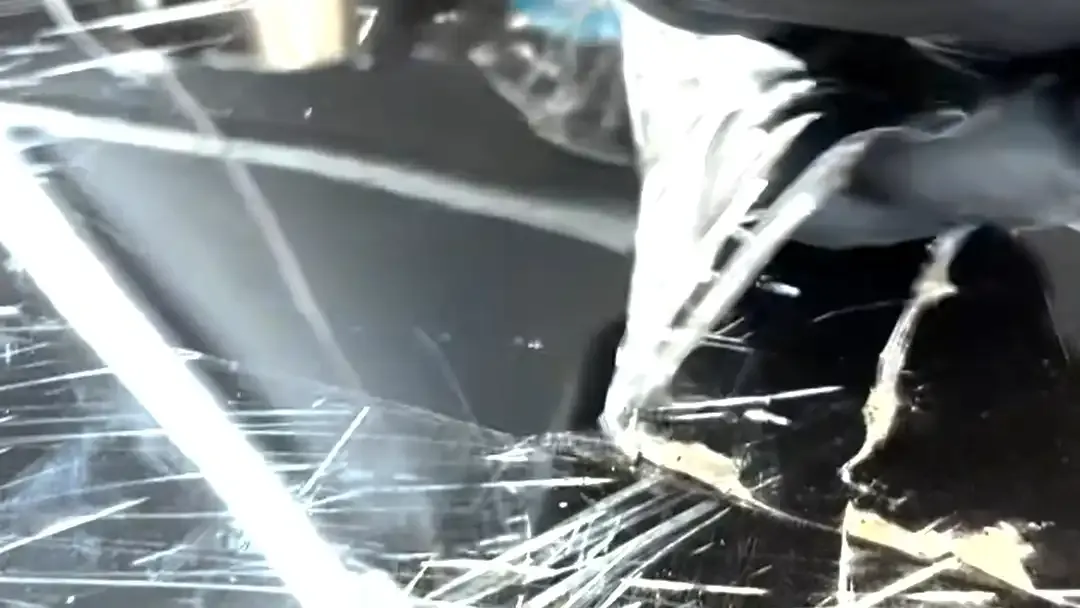
Then we peeled the film off.
One thing worth saying plainly before anyone says it in the comments: this is a demo panel, not a customer car. We could hit it as hard as we wanted, which is the only reason the result is visible in 32 seconds instead of three years.
Why the Film Absorbs It
The mechanism is not complicated, and it comes down to two properties.
Thickness. Standard PPF is about 8 mils, roughly 200 microns. Factory clear coat is typically 40 to 50 microns. The film is four to five times thicker than the layer it is protecting, and it is sacrificial by design.
Elasticity. PPF is a thermoplastic urethane, not a rigid plastic. Under impact it stretches and rebounds rather than fracturing. Clear coat is hard and brittle by comparison, which is exactly why it chips: a hard thin layer over a rigid substrate has nowhere for impact energy to go except into a fracture.
What the Film Stopped
The abrasion did not get through. Standing on the panel and scraping it across asphalt, banging it on the pavement, sliding it along the block wall: all of that landed in the urethane and stayed there. The film was chewed up. The paint under it was not.
That matters more than it sounds, because abrasion is the realistic category. Sand and grit at highway speed, road salt slurry, a brush car wash, gravel spray off a truck. Those are exactly the forces we ground into that panel on purpose, at far higher intensity than a road delivers, and the clear coat came through them.
Where the Film Reached Its Limit
Now the part most shop videos cut out.
The hammer dented the panel. Not the paint, the metal. Film is roughly 200 microns of urethane; it is not armor, and it does not stop a steel head swung by hand from deforming sheet metal. The dents were visible after the film came off.
Some of the deepest gouges went through. In the most extreme passes, where we were deliberately trying to destroy the thing, the damage got past the film and into the paint.
Here is the honest read on that. A hammer blow carries far more energy than a stone off a truck tire, and nothing on Sunrise Highway is going to hit your hood the way we hit that panel. The film failed at a level of abuse a car will never see, and it held everywhere below that level. Which is exactly what you want to know before spending a few thousand dollars: not that the product is invincible, but where the ceiling is and how far above your actual driving it sits.
What the Test Still Does Not Tell You
Two more limits, since we are being straight about it.
It does not simulate time. The real test of film is 10 years of UV, salt, heat cycling, and thousands of small hits. That is what the manufacturer warranty covers, and it is a far more meaningful claim than any 32 second video, ours included.
It does not tell you anything about install quality. Film performs when edges are wrapped into panel gaps, the paint was corrected before application, and the material was not stretched past its limit. A perfect film on a bad install still lifts and fails.
The Comparison Everyone Asks About
The most common follow-up is whether ceramic coating does the same thing more cheaply. It does not, and the numbers make it obvious.
| Ceramic Coating | Paint Protection Film | |
|---|---|---|
| Thickness | 2 to 5 microns | About 200 microns |
| Stops rock chips | No | Yes |
| Self-healing | No | Yes, on premium films |
| UV and chemical resistance | Excellent | Good |
| Easier washing | Excellent | Good |
Ceramic coating is roughly fifty times thinner than film. There is no chemistry that closes that gap. Coatings are the right product for UV, water spotting, chemical etching, and making the car easier to clean. They are not impact protection, and we tell people that before they book, not after.
The two are complements, not alternatives. The setup most of our daily drivers end up with is film on the front impact zones and ceramic over the whole car, including on top of the film. If you are deciding between them, we broke that down in PPF vs ceramic coating: which should you get first.
What This Looks Like on a Real Car
On a Long Island commuter, the front bumper, hood leading edge, and fender edges take almost all of the debris. That is why full front coverage is the tier most highway drivers land on: it covers the panels the road actually hits, with every edge tucked into a panel gap so there is no visible film line.
You will not see the film doing its job, which is the strange part of owning it. There is no dramatic moment. Three years in, the hood simply does not have the constellation of chips that an unfilmed hood at the same mileage has. The video is the only way to make an invisible product visible.
The Bottom Line
PPF works because it is thick, elastic, and sacrificial. It takes the abuse a road actually delivers and keeps it out of your clear coat. It is not armor, and we have the dented test panel to prove it, but nothing your car will meet on the LIE swings a hammer.
Whether it is worth it for you depends on your miles, your paint, and how long you are keeping the car. We covered the money side in how much PPF costs on Long Island.
Request a PPF quote or come by the studio in Ronkonkoma and ask to see the test panel in person. We will walk your car with you, show you where chips land on that specific model, and tell you honestly if film is worth it for how you drive.
Frequently Asked Questions
Does PPF actually stop rock chips?
Yes, within the range of impacts a road actually produces. Paint protection film is roughly 8 mils thick, about 200 microns, and it is an elastomeric urethane, meaning it deforms under impact and returns to shape instead of fracturing. A stone that would chip through clear coat into the base coat spends its energy deforming the film instead. What film does not do is stop a large enough impact from denting the panel underneath. We proved that on our own test panel with a hammer, which is far more energy than any road debris carries.
Can PPF be scratched?
The film can be scratched, and that is the point. Scratches land in the film rather than in your clear coat. Most modern premium films also have a self-healing topcoat, so light swirls and fingernail-depth scratches disappear with heat from the sun or warm water. Deep cuts that go through the topcoat stay, but the paint beneath is still untouched.
Is a PPF demo test on a spare panel realistic?
Parts of it are, and parts of it deliberately are not. The abrasion passes, scraping the panel across asphalt and sliding it along a wall, are a fair stand-in for grit, salt slurry, and gravel spray, and the film absorbed all of it. The hammer is not realistic at all. It carries far more energy than a stone off a truck tire, and it dented the panel. The point of a demo panel is that we can push past the limit on purpose, which tells you where the ceiling actually is rather than just that the product survived a gentle test.
Does ceramic coating protect against rock chips like PPF does?
No. Ceramic coating is a chemical layer roughly 2 to 5 microns thick. Paint protection film is about 200 microns. That is a difference of roughly fifty times, and it is the entire reason film absorbs impact and coatings do not. Ceramic coating is excellent for UV, chemical etching, and easier washing. It is not impact protection, and any shop claiming otherwise is overselling it.
Does PPF damage the paint when it is removed?
Not when it is quality film removed correctly. Professional PPF comes off with controlled heat and slow lifting, leaving the original paint intact and usually in better condition than the surrounding panels, since it was sealed from UV and contamination the whole time. Cheap films and amateur removal that overheats the adhesive are where residue and clear coat damage come from.