
The Quick Answer
At Revibe, professional paint protection film on Long Island in 2026 starts at:
- Bumper protection (clear bra): starting at $600
- Full front (bumper, hood, fenders, mirrors, headlights): starting at $2,400
- Full vehicle PPF (every painted panel): starting at $5,000
Final price moves up from those baselines based on vehicle size, body line complexity, the film brand selected, and any paint correction needed before install. A small sedan in clean condition sits at or near the starting number. A large SUV or a vehicle needing paint correction first will run higher.
The rest of this post breaks down what’s included at each tier, what drives the cost up, and how to evaluate a PPF quote anywhere on Long Island.
What PPF Actually Is
Paint protection film is a clear urethane film, typically 8 mils thick (roughly 0.2mm), applied over the paint with a precise installation process. It is a physical barrier against rock chips, road debris, light scratches, and stone pitting. Modern PPF is also self-healing: small scratches disappear when the film warms up, because the urethane reflows back to its original shape.
PPF is not the same as a “clear bra.” The term “clear bra” originated from the earliest partial-front installations that covered just the bumper area like a car bra. Modern PPF is a higher-spec product used across any painted surface, and the terminology has caught up. “Clear bra” today usually means partial-front PPF specifically.
What Professional PPF Installation Includes
A legitimate PPF install is much more labor-intensive than ceramic coating. Typical included steps:
- Full decontamination wash and dry: paint must be clean and bone-dry before film contact
- Clay bar and chemical decontamination: any contaminants between paint and film become permanent
- Panel inspection: surfaces examined for defects; any defects flagged before install
- Template prep or freehand cutting: most shops use precision computer-cut templates specific to the vehicle, which cost money to license per install
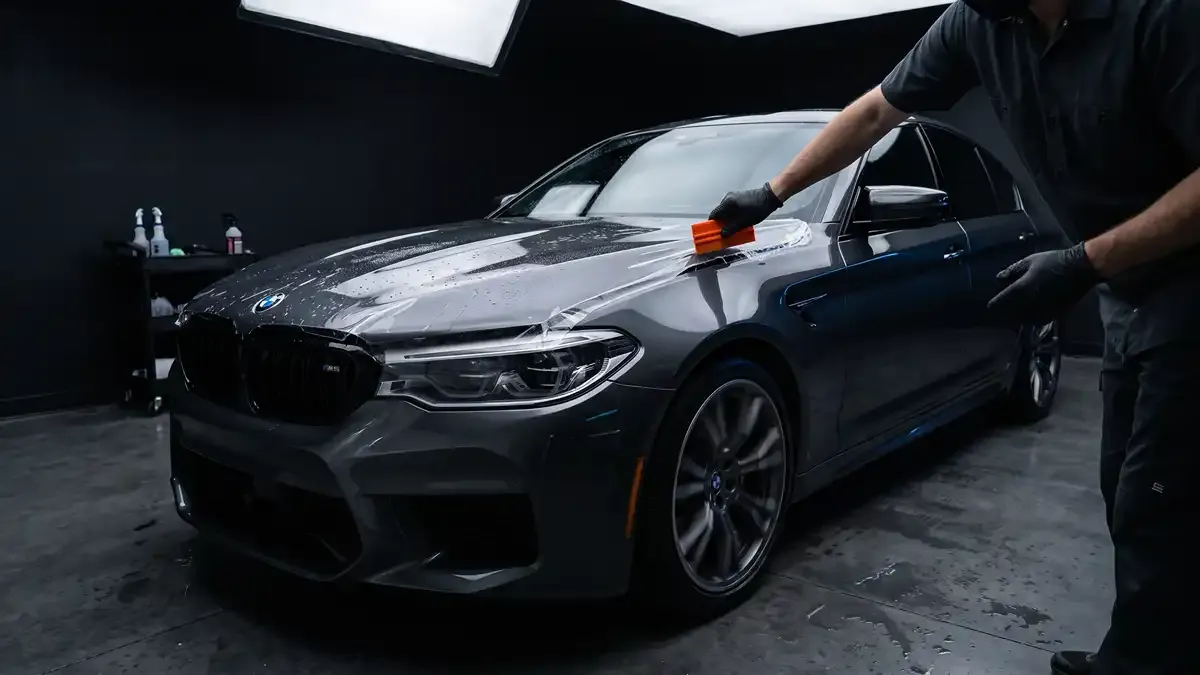
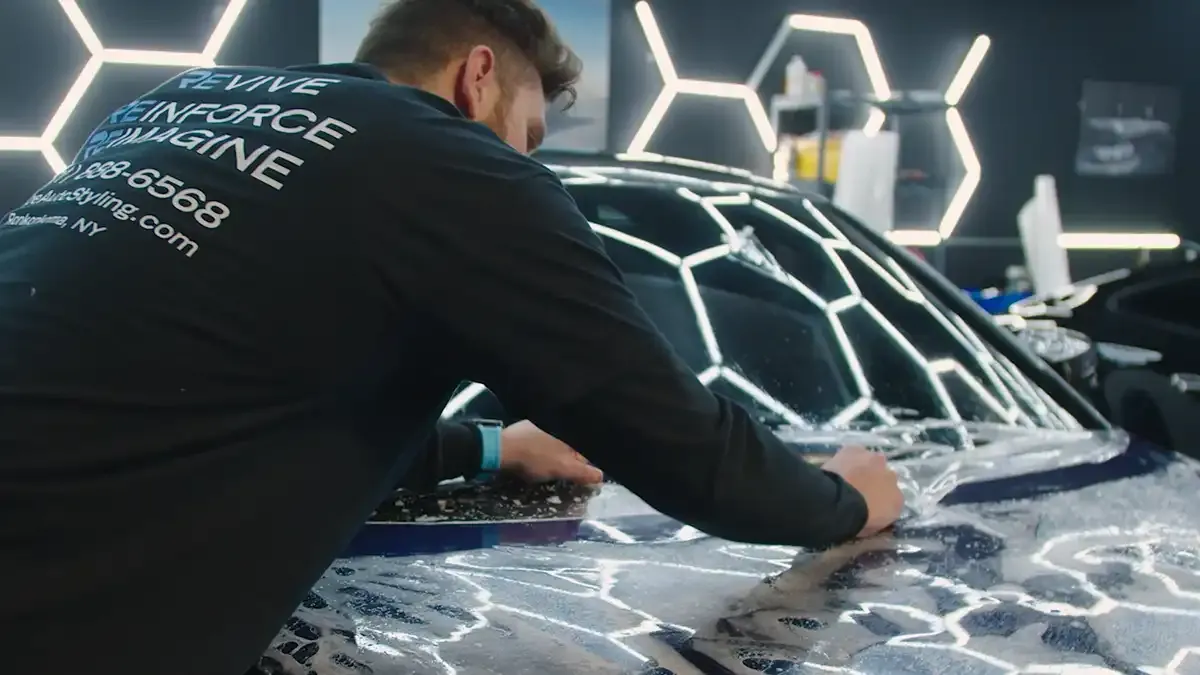
- Film application with slip solution: each panel gets the film positioned, water-activated, and squeegeed to final position
- Heat-shaping on curves: compound curves (bumpers, mirrors, fender arches) require heat to stretch the film without stress marks
- Edge-wrapping: the film gets tucked inside panel gaps so no edge is visible or liftable, which is the critical step that separates professional work from amateur
- Cure time: film takes 48 to 72 hours to fully adhere before the vehicle is safe in normal conditions
Professional install on a full-front typically takes 1 to 2 days of studio time. Full-body can take 3 to 5 days.
Pricing by Coverage Tier
Bumper Protection (Clear Bra)
Starting at $600. Covers the front bumper, the highest-impact single panel on any vehicle. This is the entry tier for drivers who want protection on the exact area that takes the most rock chips without committing to a full-front investment.
Best for: Budget-conscious buyers, vehicles that mostly see city driving, or as a first step before expanding coverage later. The front bumper alone captures a large share of the rock-chip risk at the lowest price point in the PPF category.
Full Front
Starting at $2,400. Complete coverage of the bumper, full hood, both fenders, side mirrors, and headlights. This is the most commonly installed package because it covers every front-end surface that meaningfully sees road debris.
Best for: Daily-driven vehicles, new-vehicle purchases, and anyone who wants the front end bulletproof without going to full-body coverage. This is the package most Long Island clients choose.
Choosing between these first two tiers is the most common question we get, and it usually comes down to highway miles and whether a visible film line across the hood would bother you. We compared them panel by panel in clear bra vs full front PPF.
Full Vehicle
Starting at $5,000. Every painted panel covered, including doors, quarter panels, rocker panels, door edges, trunk, and in many builds the roof.
Best for: Exotics, high-value daily drivers, collector cars, show cars, or any vehicle where the paint damage cost exceeds the PPF cost. A scratch on a Ferrari door is a $3,000+ paint repair, and the PPF that prevents it is cheaper.
Custom and Track Packages
Between-the-tier packages are quoted by vehicle and use case. Examples include stealth (matte film over full front), track (full front plus rocker panels and rear-quarter leading edges), or custom partial builds that cover specific high-risk areas. Ask on booking and we will quote against the vehicle and how it will be driven.
What Drives the Price Up
Six variables move the final number:
1. Vehicle Size
A Miata and an F-350 are not the same surface area. Trucks, full-size SUVs, and vans typically run 25 to 40% higher than the base sedan pricing.
2. Body Line Complexity
Vehicles with compound curves, aggressive character lines, and intricate front-end geometry take longer to install because the film has to be heat-shaped carefully to avoid stress marks. A Tesla Model 3 with its smooth surfaces is easier to install than a Porsche 911 Turbo with its sculpted hood and fenders. The Porsche will cost more in labor.
3. Film Brand
Budget films (Suntek Ultra-C, basic Avery) are priced differently than premium films (Xpel Ultimate Plus 10, STEK Dynoshield, SunTek Reaction). Premium films have longer warranties (typically 10 years vs 5), better clarity over time, and self-healing formulations that outperform budget options. The film cost alone can vary by $200 to $500 across tiers.
4. Paint Correction (if needed)
PPF goes over the existing clear coat. If the paint has defects, they stay there forever under the film. Most reputable shops require paint correction before PPF if the paint has visible swirls or etching. That adds $300 to $800+ depending on severity.
5. Edge-Wrapping Scope
Some quotes look cheap because the shop is not edge-wrapping (tucking the film into panel gaps). Visible edges look amateurish and lift over time. Professional edge-wrapping is a significant portion of total install time, and shops that skip it quote lower but deliver worse work.
6. Warranty Structure
Some shops offer install warranties on top of the manufacturer film warranty. A 10-year manufacturer warranty + 2-year install warranty is what you want. A shop without an install warranty means if the film fails because of installation error, you’re out of luck.
Why PPF Is Worth It on Long Island Specifically
Three Long Island driving conditions make PPF a higher-leverage investment here than in a climate-neutral area:
- Commute road quality. The LIE, Sunrise Highway, and Northern State throw substantial rock chip and debris at front ends. Every unprotected daily driver accumulates visible chips within 18 to 24 months of ownership.
- Winter road treatment. Salt, brine, and sand thrown at front ends during snow removal creates pitting and paint damage that PPF absorbs.
- Highway density. Long Island traffic means you’re often behind or beside other vehicles, which is when debris from their tires becomes debris at your paint.
A chip repair job (respraying panels that have taken too many chips) costs in the same range as full-front PPF. The difference: the repair is after-the-fact and recurring. PPF is one-time and prevents the need for the repair.
PPF vs Ceramic Coating Pricing
PPF costs significantly more than ceramic coating at every coverage tier. Rough comparison:
- Full-front PPF: starting at $2,400
- Full-body ceramic coating (5-year warranty): starting at $999
This is not comparing apples to apples because they protect against different things, but the math matters for budget planning. If your budget is limited, most Long Island daily drivers get more value from ceramic coating across the whole vehicle than from partial PPF on the front end alone. But if highway rock chips are your biggest concern, PPF is the only thing that stops them.
For the full decision framework, see PPF vs ceramic coating: which should you get first. For ceramic coating cost specifics, see how much ceramic coating costs on Long Island.
Is PPF Worth the Investment?
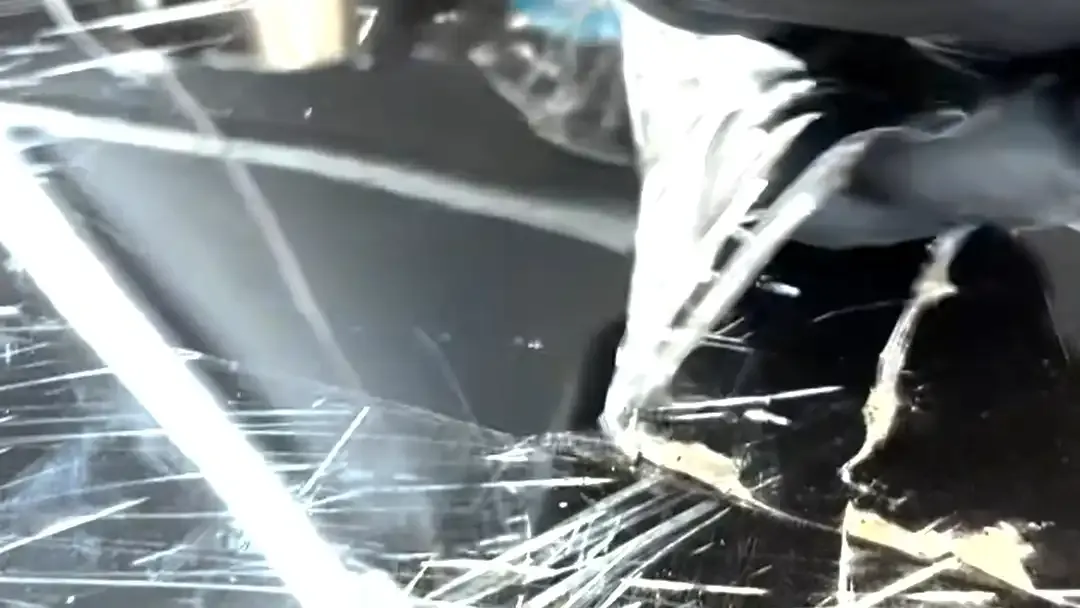
Before the list, here is what the money actually buys. We wrapped a spare hood panel, hit it with a hammer, gouged it with a screwdriver, and scraped it across asphalt, then peeled the film off to show the paint underneath:

More on that test in does PPF actually work.
PPF is worth it if any of these apply:
- You drive the LIE, Sunrise, or Northern State regularly
- Your vehicle is new (depreciation offset from preserved paint is meaningful)
- Your vehicle is a high-value purchase where chip repair costs more than the film
- You plan to keep the vehicle 5+ years (PPF outlasts most ownership periods)
- You want to sell the vehicle in pristine condition for maximum resale
PPF is not worth it if:
- The vehicle will be sold or traded within a year
- The vehicle is a garaged weekend car with minimal highway use
- The paint is already severely damaged (needs repair before any protection)
- The budget is constrained and ceramic coating would deliver more total coverage value
Getting an Accurate Quote
Final PPF pricing requires seeing the vehicle. Online calculators can get you in the rough range, but body line complexity and existing paint condition vary enough that accurate pricing comes from in-person inspection.
At minimum, a legitimate quote should include:
- The specific film brand and warranty
- The panels covered (with a walk-around confirming, not just a name)
- Whether edge-wrapping is included on every edge
- Whether paint correction is included or quoted separately
- The total cure time before you can wash or drive in rain
Request a free PPF quote and we’ll walk through your vehicle, your usage pattern, and the right package tier. No template answers.
Frequently Asked Questions
Can PPF be removed without damaging the paint underneath?
Yes. Professional PPF installed correctly can be removed cleanly at end of life, leaving the original paint intact and often in better condition than surrounding panels. Removal requires controlled heat and slow lifting. Cheap films or amateur installs that overheat the adhesive can leave residue or pull at the clear coat.
Does PPF yellow or turn cloudy over time?
Modern premium PPF resists yellowing for the full warranty period, typically 10 years. Older or budget films can yellow under prolonged UV exposure, especially on hood and roof panels. Most reputable shops on Long Island only install non-yellowing topcoat films because the long-term appearance is part of the value proposition.
Is PPF worth it on a leased vehicle?
It depends on the lease terms and how the vehicle is driven. For 3-year leases with high mileage on Long Island highways, full-front PPF often pays for itself by preventing chip damage that triggers lease-end charges. For shorter leases or low-mileage drivers, partial bumper protection at the entry tier delivers most of the benefit at a fraction of the cost.
Can PPF be installed on a used car?
Yes. Used cars are common PPF candidates, especially low-mileage examples bought as long-term keepers. Paint must be inspected first because PPF locks in existing defects. Most installs on used cars include two-stage paint correction before the film goes on, with the level of correction tailored to the existing paint condition.
Does PPF make the paint look different?
Quality PPF is optically clear and largely invisible once installed. From a normal viewing distance the paint looks unchanged, with the same color depth and gloss as before. Edge lines are tucked into panel gaps so no film border is visible. Matte and satin variants are also available if a different finish is the goal.