
The Quick Answer
Professional ceramic coating on Long Island typically runs $799 to $1,400+ for a full-vehicle installation at most reputable studios. The range depends on three things: the product’s rated service life (3-year, 5-year, 7-year, or 10-year formulations), the condition of the paint (whether it needs correction first), and the vehicle size.
Anything priced below $500 is almost certainly a consumer-grade product applied without the prep work that makes ceramic coating actually last. Anything priced above $2,000 is usually a multi-layer or 10-year-rated system on a larger vehicle, often with included paint correction.
The rest of this post breaks down what you’re actually paying for, why the numbers spread the way they do, and whether ceramic coating is worth it for a Long Island daily driver.
What Professional Ceramic Coating Actually Includes
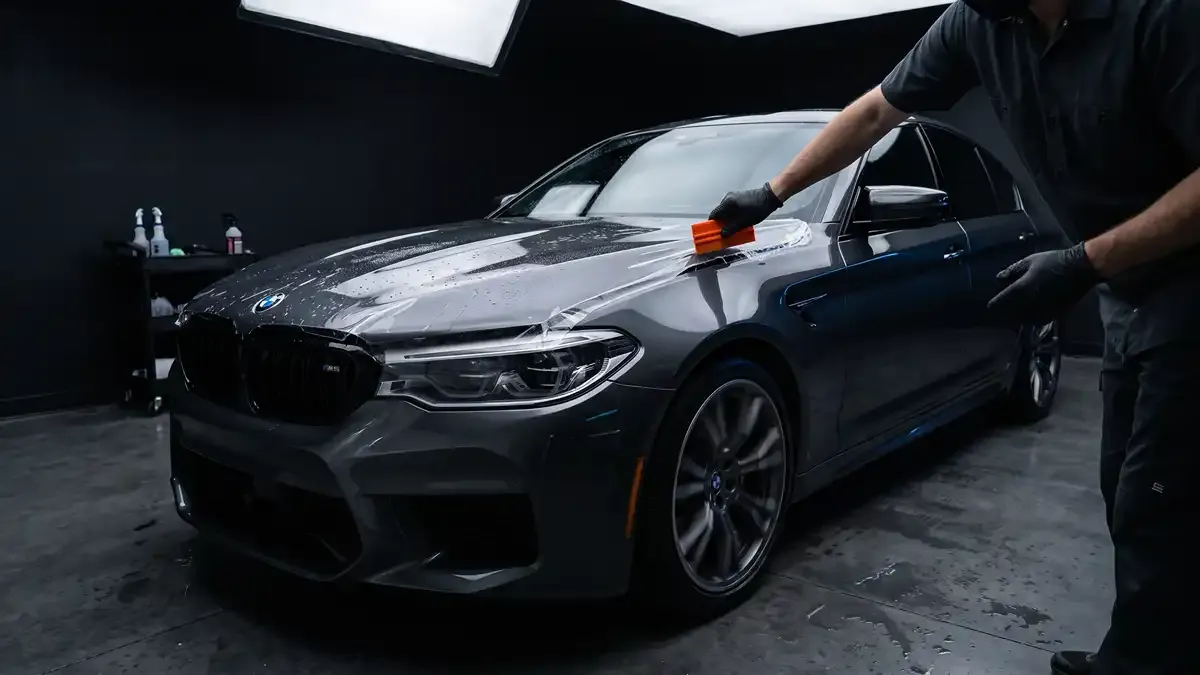
A legitimate ceramic coating installation is not just the coating itself. Typical included steps:
- Full decontamination wash: a proper two-bucket or foam-cannon wash to remove surface grime
- Iron decontamination: chemical treatment that dissolves embedded brake dust and rail dust
- Clay bar treatment: mechanical removal of bonded contaminants the wash missed
- Paint inspection under controlled lighting: surfaces examined for defects before coating
- Paint correction (if needed): polishing to remove swirls, light scratches, and oxidation
- Panel wipe with IPA: final prep to remove residual oils before coating
- Coating application: typically one or two layers depending on package tier
- Cure time: the vehicle sits in climate control for several hours to 24+ hours after application
- Multi-point inspection: every panel checked for high spots or missed coverage before delivery
The coating itself is usually the smallest line item in the bill. The labor for prep and correction is where the hours go, and that labor is what determines whether the coating actually lasts.
Typical Package Tiers on Long Island
Most professional studios in the Long Island area structure ceramic coating packages by the coating’s rated service life. At our studio, the current tiers look like this:
Essential, 3-Year Protection
From $799. Includes paint correction, decontamination, and a single-layer nano-ceramic coating. Covers paint, headlights, taillights, and windows, with a hydro sealant on the wheels. This is the entry-level package appropriate for a vehicle in good existing condition that isn’t going to live in harsh conditions.
Professional, 5-Year Protection
From $999. Multi-layer ceramic system, full paint coverage, headlights, taillights, and windows included, plus 3-year ceramic on rim faces. This is the package most Long Island daily drivers choose because the 5-year service life aligns with typical vehicle ownership.
Elite, 7-Year Protection
From $1,399. Two-stage paint correction, pro-grade ceramic coating, glass and rim coatings included (5-year on rims). This is the package clients pick when they plan to own the vehicle long-term and want minimal intervention over those years.
10-Year Coating
Contact for quote. Two-stage paint correction, 10-year pro-grade ceramic coating on paint, glass and rims included. This is the premium tier, usually booked for luxury vehicles, collector cars, or anyone who wants the longest service life currently available in consumer ceramic chemistry.
Pricing above is the baseline for standard-size vehicles. Larger vehicles (full-size SUVs, pickup trucks, vans) run higher because the surface area is larger and the labor time increases proportionally.
What Drives the Cost Up
Five variables move the final price:
1. Paint Condition
If the vehicle has visible swirl marks, etching, water spots, or oxidation, paint correction comes before coating. You cannot coat over defects, the coating locks them in permanently. Single-stage correction is included in most mid-tier packages; two-stage correction (compounding plus polishing) adds several hundred dollars but is the only way to fix heavy damage.
A vehicle that has been through automatic car washes for years almost always needs at least single-stage correction. A vehicle that has been hand-washed properly may need very little. For a breakdown of what separates the tiers and what each pass actually removes, see our guide to paint correction levels.
2. Vehicle Size
A Mazda Miata and a Ford F-250 are not the same amount of work. Most studios quote a small-car rate, a mid-size rate, and a full-size/SUV rate. Expect 15 to 25% uplift on the base price for trucks and full-size SUVs.
3. Service-Life Tier
Longer-rated coatings use more product layers or higher-grade formulations. A 10-year coating uses different chemistry than a 3-year coating, and the material cost alone is several times higher. You are not just paying for time on paper, you are paying for the coating’s actual chemical composition.
4. Added Surfaces
Coating the paint is the baseline. Every added surface (glass, wheels, calipers, plastics, interior leather) adds material and labor time. Most packages include glass and some wheel coverage at their respective tiers.
5. Condition of the Vehicle
If the vehicle arrives extremely dirty, has sap or tree residue requiring chemical removal, or has aftermarket panels that need special prep, those add labor hours. Reputable studios quote these on inspection, not in advance.
What Doesn’t Drive Cost (But Some Shops Pretend It Does)
Ceramic “brand name” alone. The actual brand of coating matters less than the application quality. A pro-grade 10-year product applied poorly is worse than a 3-year product applied correctly.
“Nano-technology” buzzwords. All modern ceramic coatings are nano-scale by definition. Any shop charging a premium specifically for “nano” is marketing, not chemistry.
“Lifetime” claims on cheap coatings. No consumer ceramic coating actually lasts a lifetime in real driving conditions. A $400 coating with a “lifetime” label from a pop-up detail shop is a different product than a $1,400 pro-grade coating installed with proper prep. Focus on the coating’s actual chemistry and the installation standard, not the marketing claim.
Why the Cost Is Lower Than You’d Think
Ceramic coating is cheaper than the alternatives when you do the math:
- Monthly wax equivalent: a quality wax job every month for 5 years runs $3,000 to $9,000 in labor alone, and it doesn’t protect nearly as well
- Repainting due to UV damage: a clear coat failure from unprotected UV exposure can cost $3,000 to $10,000+ to correct, depending on the panels affected
- Resale value: clean paint sells faster and for more money; the difference at trade-in time often pays for the original coating
The way to evaluate ceramic coating financially is not “what does it cost today” but “what does it save over the life of the vehicle.” For most Long Island daily drivers who keep their cars 5 to 10 years, the 5-year or 7-year tier pays for itself several times over.
Why the Cost Is Justified on Long Island Specifically
Three Long Island conditions make ceramic coating a higher-leverage investment here than in a climate-neutral zone:
- Winter road salt and brine. Ceramic coating makes salt sheet off rather than bonding to the paint. Over a single winter that difference is measurable; over five winters it’s substantial.
- Coastal salt air. South-shore and North-shore drivers deal with accelerated oxidation that ceramic coating meaningfully slows.
- Summer UV intensity. UV is the single biggest cause of clear-coat failure on older vehicles, and ceramic adds UV resistance that clear coat alone doesn’t have.
Ceramic coating pays back faster here than it would in a milder climate.
When Ceramic Coating Isn’t Worth It
It’s worth being honest about the cases where ceramic coating is not the right call:
- Vehicle you plan to sell or trade within 12 months. You won’t recoup the cost.
- Paint already failing. If the clear coat is compromised (peeling, severe oxidation), ceramic can’t save it. You need paint work first.
- Lease vehicle with unlimited maintenance included. Some leases include detailing, which may cover basic protection.
- Covered parking and low annual mileage. A garaged weekend car may not justify the investment.
For everyone else, especially daily-driven Long Island vehicles, ceramic coating at the 5-year or 7-year tier is one of the highest-ROI protection services available.
Ceramic vs PPF, Briefly
Ceramic coating is often paired with paint protection film (PPF) rather than chosen instead of it. They protect against different things: PPF handles rock chips and physical impact on the front end, ceramic handles UV, salt, chemicals, and hydrophobic maintenance on every surface. We’ve covered the full comparison in PPF vs ceramic coating: which should you get first, which is worth reading before you commit to either.
For PPF pricing specifically, see how much PPF costs on Long Island.
Next Steps
If you want a specific quote, the most accurate path is to have the vehicle inspected. Paint condition varies more than people realize, and that’s the biggest variable in final pricing. A 15-minute walk-around tells us which package tier is actually right for your specific situation.
Request a free quote and we’ll give you a package recommendation with a fixed price, not a range.
Frequently Asked Questions
How long does ceramic coating last on Long Island?
Professional ceramic coatings on Long Island typically last 3 to 10 years depending on the product tier. Most daily drivers go with a 5-year or 7-year coating, which aligns with typical vehicle ownership. Long Island's salt air, road brine, and UV exposure can shorten coating life if maintenance is neglected, but proper washing extends it to the rated lifespan.
Does ceramic coating prevent rock chips?
No. Ceramic coating is a chemical barrier, not a physical one. It protects against UV, chemical etching, water spots, and light wash scratches, but rock chips and stone pitting require paint protection film (PPF). Most Long Island daily drivers who want full protection install PPF on the front end and ceramic coating over the rest of the vehicle.
How long does it take to apply ceramic coating?
A professional ceramic coating installation typically takes 1 to 3 days in the studio. The breakdown: decontamination wash, paint correction, prep, multi-layer application, and a controlled cure period of several hours to 24 hours between layers. Single-layer 3-year coatings finish faster. Multi-stage 7-year and 10-year coatings take longer.
How soon can I drive after a ceramic coating?
You can drive the vehicle immediately after pickup, but avoid rain and washing for at least 7 days while the coating fully cures. Avoid automatic car washes for the first 2 weeks. The coating reaches full hardness within 14 to 21 days, after which normal use is fine.
Can ceramic coating be applied to a used car with damaged paint?
Yes, but paint correction comes first. Ceramic coating locks in whatever is underneath, so swirls, etching, and oxidation must be polished out before the coating is applied. Most Long Island used cars need at least single-stage paint correction. Once the paint is corrected, ceramic coating bonds normally and protects from that point forward.
Does ceramic coating eliminate the need to wash my car?
No, but it significantly reduces wash frequency and effort. The hydrophobic surface sheets water and contaminants off, so dirt and salt do not bond as aggressively. Most coated vehicles need a rinse-and-dry every 2 weeks instead of a full hand wash. Skip automatic car washes because they degrade the coating over time.