
The Short Answer
Paint correction levels describe how many machine passes the paint gets and how aggressive those passes are. A single-stage correction is one polishing pass that removes most light swirling and restores gloss. A two-stage correction adds a cutting pass before the polish, which removes deeper defects the single stage cannot reach. Multi-stage correction adds further refinement and spot work for paint that you want to look flawless under direct light.
There is no official numbering system for this, which is the first thing worth knowing. One shop’s “Level 2” is another shop’s “two-step.” What actually differentiates the work is the number of passes, the aggressiveness of the compound and pad combination, and the level of defects the shop commits to removing. Ask about those three things and the naming convention stops mattering.
What Paint Correction Actually Removes
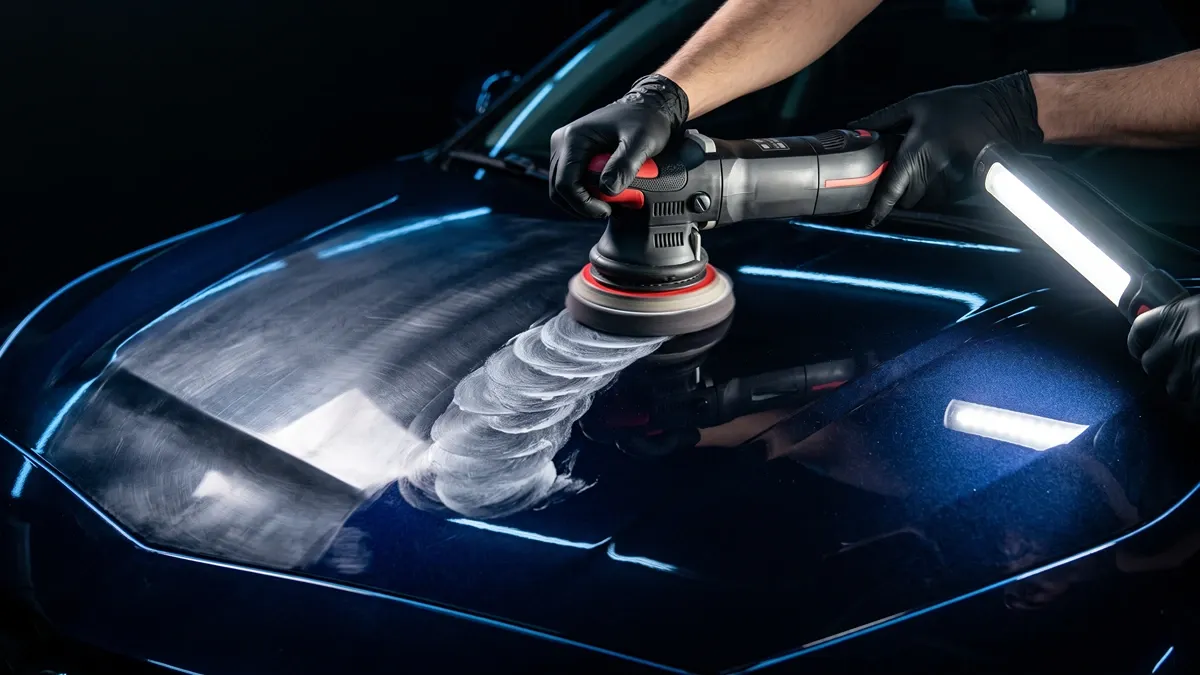
Paint correction is mechanical. A machine polisher drives an abrasive compound across the clear coat, and that abrasive levels the surface by removing a microscopic amount of material. The defect is not filled or covered. It is cut away, and the surrounding clear coat is brought down to meet the bottom of the scratch so light reflects uniformly again.
That is the part most people miss. Paint looks dull and hazy because thousands of fine scratches are scattering light in every direction instead of reflecting it back cleanly. Level the surface and the reflection comes back. The color was never the problem.
The defects correction addresses:
- Swirl marks, the fine circular scratching that automatic car washes and dirty wash mitts leave behind
- Wash-induced marring, the light hazing visible in direct sun on dark paint
- Water spot etching, where mineral deposits have burned a ring into the clear coat
- Oxidation, the chalky dead layer on paint that has spent years in the sun
- Light scratches that do not catch a fingernail
- Buffer trails and holograms left by a previous poor correction
The Three Levels in Practice
Single-Stage Correction (One-Step Enhancement)
One machine pass with an all-in-one polish or a light finishing compound. This is the enhancement tier, and on a car in reasonable condition it typically removes 50 to 70 percent of visible defects while dramatically improving gloss.
What it fixes: light swirl marks, wash marring, mild oxidation, and general dullness.
What it does not fix: deeper scratches, water spot etching that has bitten into the clear coat, and any defect that catches a fingernail.
Best for: leased vehicles, newer cars with a couple of years of wash damage, anyone preparing a car for sale, and drivers who want a clear visual improvement without paying for the full labor of a multi-pass job. It is also the right call on a car with thin or previously corrected paint, where there is simply not enough clear coat left to spend on a heavier cut.
Two-Stage Correction (Compound and Polish)
Two distinct machine passes. The first is a cutting stage using a more aggressive compound and pad to level deeper defects. The cut leaves its own fine haze behind, which is why the second refining stage follows with a finishing polish to bring the surface back to full clarity and gloss.
This is the tier most people mean when they say “paint correction,” and it typically removes 80 to 95 percent of correctable defects.
What it fixes: everything single-stage fixes, plus moderate scratches, water spot etching, and heavier oxidation. On dark paint that has been through years of tunnel washes, this is usually the level that actually resets the finish.
Best for: vehicles with visible swirl damage on dark or metallic paint, used-car purchases, and any car about to receive ceramic coating that is going to be kept long-term. If protection is going on top, this is the level that makes the investment worth it.
Multi-Stage Correction (Show Level)
Three or more passes, with the extra work going into targeted spot correction, wet sanding on specific defects, and multiple refinement stages to remove any trace of the cutting passes. Paint is inspected repeatedly under focused lighting between stages.
This tier chases the last few percent, and it is the most labor-intensive work in detailing. On a full-size vehicle it can run two to four days.
Best for: collector cars, show vehicles, exotics, dark paint where every remaining defect is visible, and vehicles with high-quality paint that justifies the labor.
How Do I Know Which Level My Car Needs?
Ask three questions about the vehicle, in this order.
First, what does the paint look like under a real light? Not in a garage and not on an overcast day. Direct sunlight or a focused LED inspection light is what reveals swirl density. If the paint looks fine in the driveway and terrible in the sun, that is classic wash marring, which single-stage handles well. If the defects are obvious even in flat light, you are in two-stage territory.
Second, does the scratch catch your fingernail? Run a nail lightly across the defect. If it catches, the scratch has gone through the clear coat and no amount of polishing will remove it safely. That defect needs paint, not correction. If your nail glides over it, correction can address it.
Third, has this paint been worked before? This one overrides the first two, because it decides how much room there is to work with. A panel that has been resprayed or corrected heavily in the past has already given up material, and it cannot safely take an aggressive cut no matter how bad the swirls look. The signs are visible if you know where to look: orange peel texture that does not match the neighboring panel, a slight color or gloss mismatch across a panel gap, overspray on trim edges, or the faint straight-line hologramming a previous machine polish leaves behind.
That third question is why we do not quote a correction level over the phone. A description of the swirls tells us something. The car’s paint history, and what the panels look like under our lights, tells us the rest.
Why Paint Thickness Sets the Ceiling
Clear coat is a finite resource. A factory clear coat is roughly 40 to 60 microns thick, and it is the only thing standing between UV light and your color coat. Every correction pass consumes a few microns of it. A car can typically take two or three proper corrections across its entire life before the clear coat is too thin to work safely.
That is the real argument against correcting a car every year. It is also the argument for protecting the paint immediately afterward, because the alternative is spending clear coat over and over to undo damage that should have been prevented.
Panels that have been resprayed are the other complication. Aftermarket paint jobs vary wildly in thickness and hardness, and a body shop panel can carry either far more clear coat than factory or far less. Treating every panel on its own terms, rather than running one aggressive setting over the whole car, is what keeps a correction from turning into a burn-through.
What Correction Cannot Fix
Being clear about the limits is part of the job:
- Deep scratches through the clear coat. If it catches a nail, it needs paint.
- Rock chips. There is no material there to level. Chips need touch-up or respray.
- Failing or peeling clear coat. Once clear coat has delaminated, polishing accelerates the failure.
- Sanding scratches from a bad respray. Sometimes correctable, often not, and it depends entirely on how much clear the body shop laid down.
Any shop that promises to polish out a chip or a nail-catching scratch is either filling it temporarily with glaze or has not looked at it closely.
Correction Comes Before Protection, Always
Paint correction and paint protection are two halves of the same job. Correction resets the surface. Protection preserves the reset.
Applying ceramic coating over uncorrected paint permanently locks every swirl and etch mark under a hard, semi-permanent layer. The same is true of paint protection film, which seals whatever is beneath it under urethane for the next decade. Both products bond to the surface they are given, and neither improves the paint underneath.
Why a Coating Cannot Hide What Is Under It
A cured ceramic coating is roughly two microns thick and optically clear. It flows into the surface it is given and hardens following that exact topography. A swirl mark in the clear coat is still a swirl mark after coating, with a harder, glossier layer sitting on top of it. Nothing in the chemistry fills a scratch or levels a surface, because that is not what the product does.
In practice, coating uncorrected paint tends to make the defects more visible, not less. Coatings increase gloss and reflectivity, and reflectivity is precisely what makes swirl marks show. More light bouncing cleanly off the surface means more light scattering out of every scratch. Clients coming from other shops are regularly surprised to see swirling on a freshly coated car that they had never noticed before. The coating did not cause it. It turned the lights up on it.
The Cost of Skipping the Correction
Coatings are designed not to come off. That is the entire value proposition, and it is also what makes this mistake expensive. A five-year coating does not wash off or wear away on a useful timescale, so changing your mind about the paint underneath means polishing the coating off first.
That turns a job you could have done once into three line items: removal, correction, and a second full coating. The correction you skipped costs meaningfully less than the correction plus everything else it drags along with it. PPF is the same problem on a longer clock, since the film is sealing that paint for the better part of a decade.
How Much Correction Does a Coating Actually Need?
In our studio, almost always a two-stage.
That is not an upsell, it follows directly from the two points above. A single-stage leaves 30 to 50 percent of the defects in the paint. The coating then seals those defects in for the next five years and raises the gloss, which makes them easier to see rather than harder. That is not a car we are willing to hand back.
The standard we work to is not how the paint looks the afternoon you pick it up. It is how it looks two years in, with the coating doing exactly what it is supposed to do. Getting there means removing the defects properly the first time, because with a semi-permanent product on top, the first time is the only inexpensive time.
The exceptions are real, and the paint sets them rather than the budget:
- Thin or previously corrected clear coat. If a panel has already given up material to an earlier correction or a respray, a heavier cut is off the table no matter what the swirls look like. What the paint can safely spare always wins that argument.
- Resprayed panels where the film build is unknown or inconsistent from one panel to the next.
- Genuinely clean paint. A carefully handled new car, or a garage-kept car that has only ever been hand washed, can finish to our standard in one refined pass. This is less common than people expect, because dealer prep washes and transport handling leave marring on a surprising number of cars that have never been driven.
Worth checking on any coating quote: most packages bundle in a level of correction, and which level is bundled is what separates two quotes that otherwise look similar. A coating price that looks unusually low almost always has a single-stage behind it. Our breakdown of ceramic coating cost on Long Island covers what each package tier includes.
This is also why bare corrected paint is a temporary state. The moment a corrected car goes through one careless wash, new marring starts. Correction without protection is a result with a very short shelf life, which is why we finish every correction with a coating or sealant before the car leaves.
If you are weighing which protection to put on top, our breakdown of PPF vs ceramic coating and which to install first covers the decision.
The Long Island Factor
Two local conditions push cars toward heavier correction levels than they would need elsewhere.
Tunnel washes. Long Island has a high density of automatic car washes with spinning brushes, and they are the single largest source of swirl damage we see. A car washed that way weekly for three years is a two-stage job, not a one-step.
Winter salt and spring fallout. Road brine, sand, and industrial fallout etch the clear coat over a winter. By March, paint that looked fine in November has water spot etching and embedded contamination that needs decontamination and a cutting pass. That is why correction demand spikes in spring, and why our spring detailing checklist puts decontamination before any polishing work.
The Bottom Line
Single-stage for light swirls and gloss recovery. Two-stage for real defect removal on paint that has taken years of wash damage. Multi-stage when the finish needs to hold up to direct inspection. The right answer depends on the condition of your specific paint and how much correction it has already been through, and neither of those is something you can judge from a photo.
Request a paint correction consultation and we will put the car under our inspection lights, go over it panel by panel, and tell you which level it actually needs. If a coating is going on top, expect that answer to be a two-stage, because that is the level that produces a finish we are proud to hand back.
Frequently Asked Questions
What is the difference between single-stage and two-stage paint correction?
Single-stage correction is one pass with a polish that cleans up light swirls and restores gloss, typically removing 50 to 70 percent of visible defects. Two-stage correction adds a compounding pass before the polish, which cuts deeper to remove moderate scratches and etching, then refines the surface back to a high gloss. Two-stage removes more, takes roughly twice the labor, and costs proportionally more.
How many levels of paint correction are there?
There is no industry-standard numbering, which is why quotes from different shops are hard to compare. In practice the work falls into three groups: a one-step enhancement polish, a two-stage compound and polish, and a multi-stage correction that adds extra refinement passes and spot work. What matters is the number of machine passes and what percentage of defects the shop commits to removing, not the label.
Does paint correction remove clear coat?
Yes. Every correction pass removes a microscopic layer of clear coat, which is exactly how the defect is eliminated rather than hidden. A typical factory clear coat is around 40 to 60 microns thick, and a well-executed stage removes only a few microns. We work from the least aggressive pad and compound combination that will clear the defect, and step up only where the paint needs it, so no panel gives up more material than it has to.
How long does paint correction take?
A single-stage polish on a clean sedan is usually a few hours to a full day. Two-stage correction on a full vehicle is typically one to two days. Multi-stage show-level correction can run two to four days depending on the size of the vehicle and how much spot work the paint needs.
Is paint correction permanent?
The defects that are removed are gone permanently, because material was taken off, not filled. What is not permanent is the corrected condition itself. Bare corrected paint will start collecting new swirls from the very next wash, which is why correction is almost always followed by ceramic coating or paint protection film to lock the result in.