The Short Answer
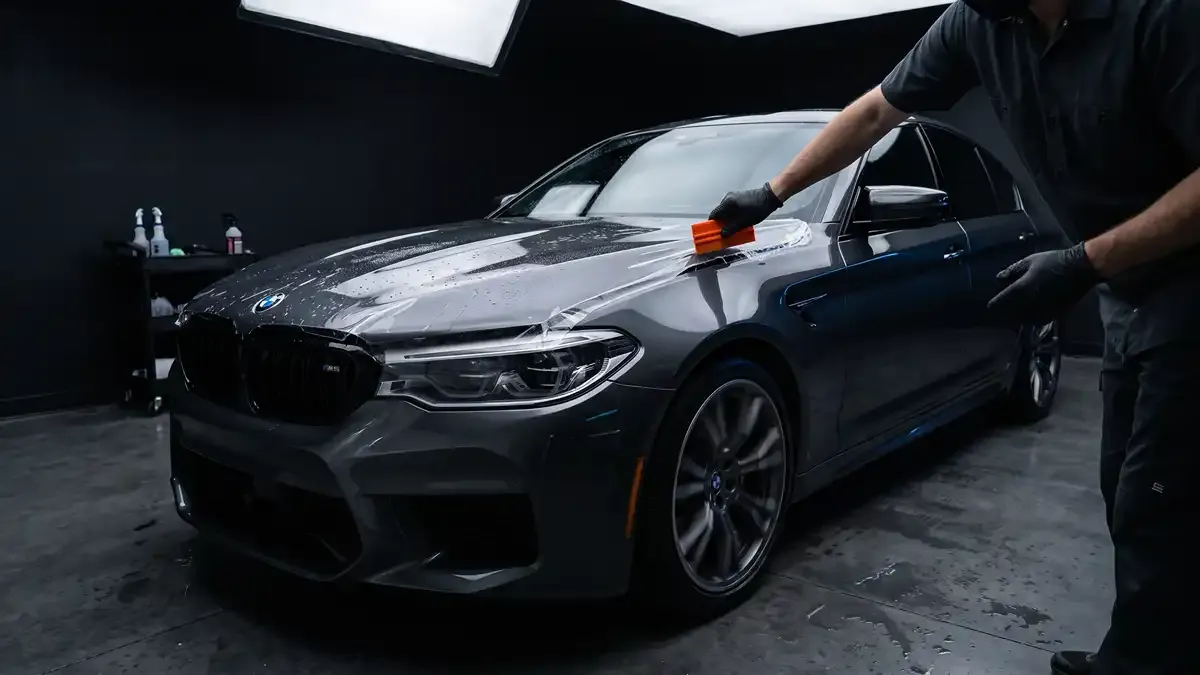
A clear bra is partial coverage, usually the front bumper alone. Full front PPF covers the bumper, the entire hood, both front fenders, the mirrors, and the headlights. Same film, same install process, different number of panels.
The bumper is the single highest-impact panel on any vehicle, so a clear bra captures a large share of the rock-chip risk for the least money. Full front covers the panels a bumper-only install leaves exposed, and it eliminates the visible film line that partial hood coverage eventually creates. Which one is right comes down to how many highway miles you drive and how long you plan to keep the car.
Where the Terminology Comes From
“Clear bra” is a holdover. Before paint protection film existed as a mainstream product, people protected front ends with vinyl car bras, the black covers that strapped over the nose of the car. When urethane film arrived it did the same job invisibly, so the name carried over.
Today the term is used loosely, and that is exactly where quotes get confusing. Some shops use “clear bra” to mean any PPF at all. Most use it to mean partial front coverage. A few use it specifically for the old-school pattern: bumper, an 18 to 24 inch strip across the leading edge of the hood, and matching strips on the fender tops.
This matters because two quotes that both say “clear bra” can describe very different amounts of film. Always ask for the panel list, not the package name.
What Each Package Actually Covers
Clear Bra (Partial Front)
Starting at $600 at our studio. Coverage is the front bumper, the panel that takes more direct debris impact than everything else on the car combined. Depending on the vehicle and the quote, a partial package may also include a hood leading-edge strip and fender-top strips.
What you get: the highest-risk surface on the car protected, at the lowest price point in the PPF category.
What stays exposed: the rest of the hood, the fender faces, the mirror caps, and the headlights.
Full Front
Starting at $2,400. Coverage is the complete front bumper, the full hood, both front fenders, the side mirrors, and the headlights. Every edge is wrapped into the panel gaps, so no film line is visible anywhere on the car.
What you get: every forward-facing painted surface protected, with no exposed transition line, and headlights shielded from the pitting and hazing that eventually clouds them.
What stays exposed: the roof, doors, rockers, and rear panels. Those are addressed by full vehicle coverage, which starts at $5,000.
Those are starting figures, not flat rates. Body line complexity, vehicle size, film choice, and the condition of the paint underneath all move the number, which is why the accurate figure comes from walking the car.
Where Do Rock Chips Actually Land?
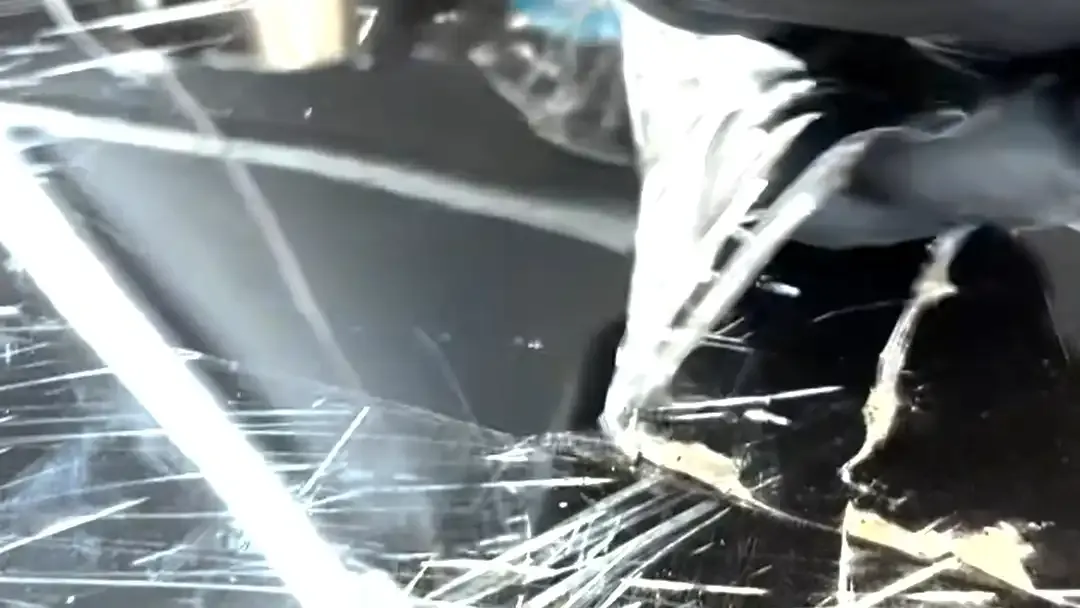
Wherever they land, this is what the film does with the impact. We wrapped a spare hood panel, took a hammer and a screwdriver to it, then removed the film:

The full breakdown is in does PPF actually work. The film is not the variable here, so the only real question is how many panels it goes on.
This is the question that should drive the decision, and the answer is not evenly distributed across the front of the car.
The bumper takes the most. It is the leading vertical surface, it sits closest to the road, and it catches everything kicked up by the vehicle ahead. On a car with no protection, the bumper accumulates chips faster than any other panel by a wide margin.
The hood leading edge is second. Debris that clears the bumper hits here at highway speed. This is why partial packages include a hood strip at all.
The rest of the hood matters more at speed. At 30 mph, most debris drops before it reaches mid-hood. At 65 mph on the LIE, gravel carries far enough back that mid-hood and even the base of the windshield see impacts. Highway mileage is what moves hood coverage from optional to worthwhile.
Fender faces catch side spray. The leading portion of each front fender takes debris thrown from the tires of vehicles in adjacent lanes, which on a congested Long Island highway is constant.
Mirrors and headlights get overlooked. Mirror caps take sandblasting from wind-carried grit. Headlights on modern cars are polycarbonate, and they haze and pit from the same debris that chips paint, which is a repair that costs real money on a car with LED or matrix housings.
So the honest read: a bumper clear bra covers the biggest single risk. Full front covers the risk that shows up once you add highway miles.
The Film Line Problem
This is the practical difference that surprises people most, and it is the strongest argument for full front on a car you plan to keep.
A partial hood wrap has to end somewhere. The film stops in the middle of a flat panel, and that edge is functionally invisible on day one. Three years later it is not. The paint under the film has been shielded from UV, road grime, and micro-abrasion. The paint ahead of it has not. The two areas age at different rates, and the boundary between them becomes a visible line across the hood.
On light-colored paint it takes longer to notice. On black, dark grey, or any dark metallic, it can be visible from several feet away in direct sun.
There is a second issue: an exposed film edge sitting in the middle of a panel is a place for wax, grime, and pressure-washer spray to work at. Edges tucked into panel gaps, which is how a full front is installed, do not have that exposure.
If you plan to sell or trade the car within two or three years, the line may never develop enough to matter. If the car is a keeper, it will.
Which Should You Choose?
Choose the clear bra if:
- The car is mostly driven on local roads and parkways rather than the LIE or Sunrise
- You are working to a firm budget and want the highest-value panel covered
- The vehicle is leased or will be sold within two to three years
- You want a starting point and plan to expand coverage later
- The car is a second vehicle or a low-mileage weekend car
Choose full front if:
- You commute on the LIE, Sunrise Highway, or the Northern State
- The car is new and you want the factory finish preserved from day one
- You plan to keep the vehicle five or more years
- The paint is dark, where both chips and a future film line show most
- The car has expensive headlight assemblies worth protecting
- Resale condition is part of why you are buying protection at all
For most Long Island daily drivers, full front is the package that gets chosen, and highway exposure is the reason. Our post on how much PPF costs on Long Island breaks down what moves the final number within each tier.
Can You Start Small and Add Later?
Yes, and there is no technical obstacle. Film can be added to additional panels at any point in the car’s life.
Two things to weigh before treating it as the default plan.
Cost. Two visits cost more than one. Each install carries setup, prep, decontamination, and template time, and paying for that twice is more expensive than paying once. The gap is meaningful, though not enormous.
Paint condition. PPF seals whatever is under it. If the hood spends two years unprotected and picks up a dozen chips before you film it, those chips are locked in unless they are touched up or the panel is corrected first. That adds cost, and touch-up under film is never invisible. The panels you film later start from worse paint than the panels you film today.
Starting small is a reasonable financial decision. It is just worth going in knowing the later expansion protects paint that is no longer in factory condition.
Adding Ceramic Coating Over Either Package
Both packages pair well with ceramic coating, and the two are usually done in the same visit.
The sequence is: paint correction if the paint needs it, then film on the covered panels, then ceramic over the entire vehicle including on top of the film. The coating adds hydrophobic behavior to the film so it cleans more easily and sheds water, and it protects the panels the film does not cover.
This pairing is especially worth considering with a clear bra, because the bumper ends up with film while the hood and fenders have only the factory clear coat. Ceramic over the whole car gives those exposed panels chemical and UV resistance even though they are not taking impact protection. It does not stop rock chips, but it is meaningfully better than bare paint.
Questions to Ask Before You Book
Whatever tier you choose, a quote should answer all of these:
- Which exact panels are covered? Get the list, not the package name.
- Is every edge wrapped into a panel gap? If any edge is left exposed on a panel face, ask why and where.
- Which film and what warranty? Premium films carry 10-year manufacturer warranties. Budget films carry five.
- Is there an install warranty on top of the film warranty? Film failure caused by installation error is not covered by the manufacturer.
- Is paint correction included or quoted separately? Anything under the film is permanent for the life of the film.
- What is the cure time? Expect to wait 48 to 72 hours before washing, and about a week before pressure washing anywhere near an edge.
The Bottom Line
A clear bra protects the panel that takes the most abuse, for the least money, and it is a legitimate choice for a low-mileage or short-term car. Full front protects everything a highway car actually needs protected, has no visible film line to develop, and is what most daily drivers here end up choosing.
The deciding factors are highway miles and how long you are keeping the car. High miles or a long hold favors full front. Local driving or a short hold makes the clear bra the better value.
Request a PPF quote and tell us the vehicle, your commute, and how long you plan to own it. We will walk the car with you, point out where chips actually land on that model, and recommend the coverage that fits rather than the largest package on the list.
Frequently Asked Questions
What is the difference between a clear bra and full front PPF?
A clear bra is partial coverage, typically the front bumper on its own, and sometimes a partial hood and fender strip. Full front PPF covers the entire bumper, the full hood, both front fenders, the side mirrors, and the headlights. The difference is not the film, it is the number of panels wrapped and whether there is a visible film line across the hood.
Does a partial hood clear bra leave a visible line?
Yes, usually. A partial wrap ends somewhere in the middle of the hood, and over time that line becomes visible because the covered paint stays protected while the exposed paint ahead of it collects chips and UV exposure. On dark paint under direct sun the edge can be seen from a few feet away. Full front avoids this because every edge is tucked into a panel gap.
Is full front PPF worth the extra cost over a clear bra?
For a highway commuter, generally yes. The hood ahead of a partial line and the leading edges of the fenders are common chip zones, and those are exactly the areas a bumper-only clear bra leaves exposed. For a low-mileage car that mostly sees local roads, bumper coverage captures the largest single share of the risk at a much lower price.
Can I start with a clear bra and add more PPF later?
Yes, and it is a common path. Film can be added to additional panels at any time. The one thing to know is that the newly filmed panels start from whatever condition the paint is in at that point, so any chips picked up in the meantime get sealed under the film unless they are addressed first. Adding coverage later also costs more in total than doing it in one visit.
How long does each PPF package take to install?
A bumper clear bra is often a single day. Full front PPF is typically one to two days, and full vehicle coverage runs two to four days. Add time if paint correction is needed first or if ceramic coating is being applied over the film in the same visit. The exact timeline is confirmed at the consultation.