
The Short Answer
In New York, the front side windows and the windshield must let through at least 70% of visible light. That rule applies to every passenger vehicle on the road, no exceptions for body style. On vehicles classified as passenger cars, the same 70% minimum also extends to the rear side windows and the rear windshield. On vehicles classified as multi-purpose vehicles or trucks (most SUVs, vans, and pickup trucks), the rear side windows and rear windshield can be as dark as you want.
That’s the headline, set by Section 375(12-a) of the NYS Vehicle and Traffic Law. The details, which is where most drivers get tripped up, are below.
What VLT Actually Means
VLT stands for Visible Light Transmission. It’s the percentage of visible light that passes through the glass and any film applied to it. A 70% VLT window lets 70% of light through, which is barely visible as a tint to the human eye. A 5% VLT window (sometimes called “limo tint”) lets only 5% of light through, which looks nearly black from the outside.
A few things to keep in mind:
- VLT is measured through the glass and the film combined, not the film by itself. Most factory glass already blocks 10 to 25% of light on its own, so a “20% film” applied to glass that already has 25% factory shading produces a measured VLT well below 20%.
- New York’s 70% rule is a minimum, not an exact target. You can leave the glass untinted (which is typically 75 to 85% VLT on a clear windshield) and still be legal.
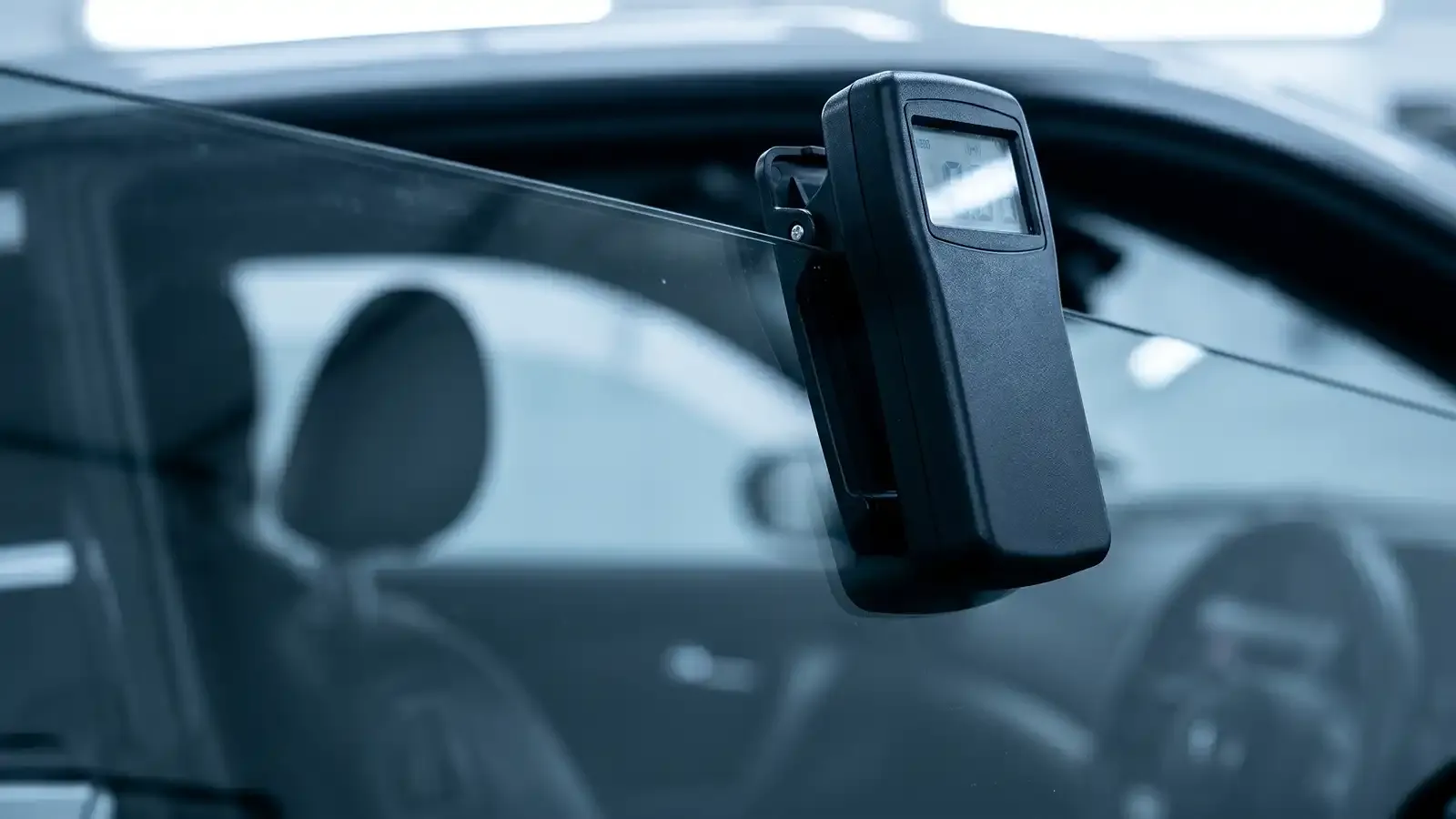
- Inspection stations measure VLT with a calibrated meter clipped onto the window. The reading is the number that decides whether you pass or fail.
New York’s VLT Rules in 2026
The rule that decides which set of restrictions applies to your vehicle is the classification printed on the Federal ID label (the sticker usually mounted on the driver’s door jamb), not the body style alone. There are two groups:
- Passenger Car on the Federal ID label: sedans, coupes, hatchbacks, station wagons, convertibles, and hardtops. The 70% VLT rule applies to every window.
- Multi-purpose Vehicle (MPV) or Truck on the Federal ID label: most SUVs, vans, crossovers, and pickup trucks. The 70% rule applies only to the windshield and front side windows. Rear side windows can be any darkness.
Passenger Cars (sedans, coupes, hatchbacks, station wagons, convertibles)
| Window | Rule |
|---|---|
| Windshield | Non-reflective tint permitted on top 6 inches only |
| Front side windows | 70% VLT minimum |
| Rear side windows | 70% VLT minimum |
| Rear windshield | 70% VLT minimum, unless the vehicle has dual outside rear-view mirrors providing full visibility |
The rear-window rule has a built-in exception. If the car has working side mirrors on both the driver and passenger doors, the rear windshield can technically be tinted darker. In practice, almost every modern passenger car has dual side mirrors, so most owners use that exception.
Multi-purpose Vehicles and Trucks (most SUVs, vans, pickup trucks)
| Window | Rule |
|---|---|
| Windshield | Non-reflective tint permitted on top 6 inches only |
| Front side windows | 70% VLT minimum |
| Rear side windows | Any darkness allowed |
| Rear windshield | 70% VLT minimum, unless the vehicle has dual outside rear-view mirrors providing full visibility |
The difference matters. MPV and truck owners can run 35%, 20%, or even 5% film on the rear side windows and remain fully legal. Factory privacy glass that comes on most SUVs is typically around 20% VLT, which is why you can buy a brand-new vehicle from the dealer with rear windows that already look dark.
If you’re not sure how your vehicle is classified, the Federal ID label on the driver’s door jamb will say so explicitly. The body type your car is marketed as does not always match the label.
Windshield Tint Rules
The windshield rule is the one most often misunderstood. New York allows a non-reflective tint strip on the top 6 inches of the windshield, sometimes called a sun visor strip or eyebrow tint. Anything below that line, including the area where the rear-view mirror sits, must be left untinted.
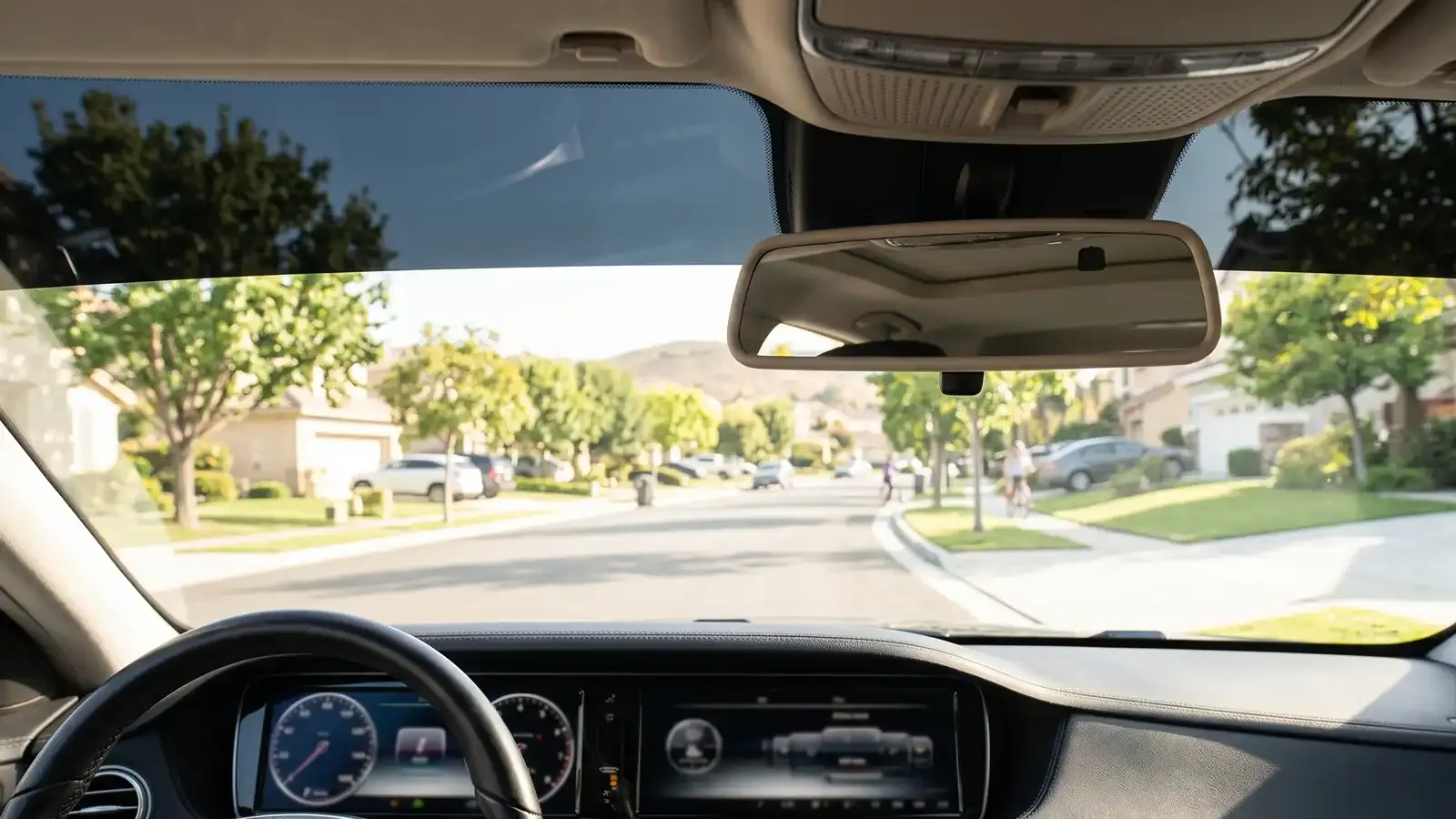
This rule is separate from the front side-window rule. A car can have a legal 6-inch top strip on the windshield and still fail inspection if the front side windows are below 70% VLT.
The Annual Inspection Catch
Effective January 1, 2017, New York added a tinted-window check to the annual motor vehicle safety inspection. Inspection stations are required to measure VLT on the front side windows during the same visit that covers brakes, lights, and emissions. A vehicle that fails VLT fails inspection, and an unresolved inspection failure can pile on registration penalties on top of the original tint ticket.
Two practical consequences:
- If you bought a used car with aftermarket tint, the next state inspection is when the law catches up to you, even if no one has pulled you over.
- Tint shops that install illegal film without warning the customer are setting up a guaranteed inspection failure within a year. A shop that won’t tell you what the VLT rule is in New York is not the shop you want doing the work.
Penalties for Illegal Tint in New York
A window tint violation in New York is a traffic infraction issued under VTL §375(12-a). The fine itself can be modest, but New York also adds mandatory state surcharges to every traffic infraction, which typically push the real out-of-pocket cost into the low hundreds of dollars. For exact current amounts, the NY court system publishes a fine schedule that gets updated periodically.
The bigger cost is usually the remediation. If you get cited, you generally have to remove the film and have the vehicle re-inspected. Removing aftermarket film professionally runs $75 to $200 per window depending on how the film was installed and how long it’s been on. Then there’s the cost of legal tint applied correctly after the fact.
Repeat offenses can stack into higher fines, and continuing to drive a vehicle with an unresolved tint violation can complicate registration renewals.
What About Factory “Privacy Glass”?
This is the most common point of confusion. Most SUVs, minivans, and crossovers come from the factory with dark-looking rear windows. That glass is manufactured with a tint baked into the glass itself, not applied as film. It’s typically rated around 20% VLT.
Factory privacy glass on the rear windows of an SUV or truck is fully legal in New York because the rear-side-window rule allows any darkness on multi-purpose vehicles. It will pass inspection without modification. Adding aftermarket film on top of factory privacy glass is also legal on those rear windows.
What’s not legal is taking that same SUV and adding aftermarket film to the front side windows that drops the measured VLT below 70%. The front-window rule is the same whether the vehicle is a Honda Civic or a Cadillac Escalade.
Medical Exemptions
New York issues medical tint exemptions for drivers with documented conditions that require reduced UV or visible light exposure. The NY DMV specifically lists qualifying conditions including albinism, lupus erythematosus, photophobia, and severe photosensitivity that requires protection from sun exposure. Other conditions may qualify on a case-by-case basis with physician documentation.
The exemption process:
- The driver or a household member submits the Application for Tinted Window Exemption (DMV form MV-80W) with a physician’s certification.
- If approved, the DMV issues a certificate that authorizes darker tint on specific windows of a specific vehicle.
- The certificate must be carried in the vehicle at all times. A patrol officer or inspection station can request to see it.
The exemption does not override the windshield rule. You can get a darker tint on side or rear windows with a valid certificate, but the windshield restrictions still apply.
The Reflectivity Rule
New York also restricts reflective or mirror-like film. The exact statute prohibits tint that creates more glare than untreated glass. In practice, this rules out the chrome-look mirror tint that was popular in the 1990s and is still occasionally sold online.
Reputable modern films, including ceramic and carbon options, are non-reflective by design and easily pass this rule. The reflectivity rule is rarely the one that trips a driver up. The 70% VLT rule is.
Can You Still Get Real Heat Rejection at 70%?
Yes, and this is the most important thing to understand if you’re tinting a car you actually want to enjoy in summer.
A high-quality ceramic film at 70% VLT can still reject 50 to 70% of total solar energy and block 99% of UV rays. The visible light passes through (which is why the window doesn’t look dark), but infrared and UV radiation are largely blocked. That’s where the cooling effect comes from. Cheap dyed film at the same VLT does almost none of this, which is why two cars can both have “70% tint” and feel completely different on a 90 degree July afternoon on the LIE.
The lesson: in New York, where you can’t legally go darker on the front side windows, the type of film matters more than the percentage. A ceramic 70 is a real performance upgrade. A dyed 70 is mostly cosmetic.
Common Misconceptions
A few that come up almost weekly with customers researching professional window tinting on Long Island:
“I can get away with 35% if I drive carefully.” The annual inspection will catch it within a year, regardless of how you drive.
“Tint shops in other states do 5% all the time, so it must be okay here.” New York’s rule is set by state law and is genuinely enforced. The fact that another state allows it doesn’t change New York’s threshold.
“Factory tint is exempt from the law.” Factory tint on rear windows of SUVs is allowed because the rear-side-window rule allows any darkness, not because factory tint has a blanket exemption. The same factory shop installing 20% glass on the front windows of a new sedan would not pass inspection if delivered that way.
“The cop won’t notice.” Patrol officers in New York carry handheld VLT meters. Tint enforcement is one of the easier traffic stops to make stick because the violation is measurable on the spot.
What This Means If You’re Tinting on Long Island
For most drivers, the practical recommendation is:
- Front side windows: ceramic 70 film. It looks like clean factory glass and delivers substantial heat and UV rejection without inviting a ticket.
- Rear side windows (SUV, van, truck): whatever darkness suits the look you want, typically 20 to 35%.
- Windshield: clear, or a non-reflective top strip in the legal 6-inch zone.
- Always ask your installer what VLT will be measured at the inspection meter, not just what number is printed on the film roll.
If you’re also weighing other paint and surface upgrades alongside tint, the PPF vs ceramic coating comparison covers how the protection products stack against each other and which to install first. And for drivers who already plan to do a professional ceramic coating on the paint, doing the tint at the same visit is the most efficient way to handle both.
If you want a quote or want to confirm what’s legal for your specific vehicle, the fastest path is to book a consultation. We measure factory VLT before quoting so you know exactly what the inspection meter will read after the install.
Request a free quote and we’ll spec a tint package that meets New York law and the cooling performance you actually want.
Frequently Asked Questions
What is the legal tint limit on front windows in New York?
70% VLT minimum on the front side windows and the windshield. This applies to every passenger vehicle in the state, including sedans, SUVs, vans, and pickup trucks.
Can SUVs and trucks have darker tint on the back windows in New York?
Yes. On SUVs, vans, and pickup trucks, the rear side windows can be any darkness. The rear windshield must be 70% VLT unless the vehicle has functional outside mirrors on both sides, which most modern vehicles do.
How is window tint enforced in New York?
Two main ways: traffic stops where an officer measures VLT with a calibrated meter, and annual state safety inspections, which include a VLT check on front side windows. Failing the inspection means the vehicle can't be legally registered until the tint is corrected.
Do I need to remove illegal tint to pass inspection?
In most cases, yes. The inspection station can't pass a vehicle with front side windows under 70% VLT. Some shops offer same-day removal and re-inspection, which avoids a registration lapse.
Is ceramic tint legal in New York?
Ceramic tint is legal as long as the installed VLT meets the 70% minimum on the front windows. Ceramic film is the most common premium option in New York specifically because it delivers heat and UV rejection at legal light-transmission levels.
How much does a legal window tint cost on Long Island?
A full vehicle in ceramic 70 on the front windows and a darker shade on the rear windows of an SUV typically runs $400 to $800 depending on the film grade and vehicle size. Full-ceramic packages with lifetime warranty coverage run higher.