
What is a Vinyl Wrap?
A vinyl wrap is a large sheet of adhesive vinyl film professionally applied over a vehicle’s original paint to change its color and finish without permanent modification. Wraps come in hundreds of colors and finishes (gloss, matte, satin, chrome, and color-shift) and are fully reversible, leaving the factory paint intact underneath. A quality wrap installed by an experienced shop typically lasts 5–7 years.
Why Color and Finish Matter More Than You Think
A vinyl wrap is one of the most dramatic changes you can make to a vehicle without permanent modification. But picking the right color and finish is the difference between a head-turner and a regret.
This isn’t just about what looks good in a photo. You need to consider how the finish interacts with your vehicle’s body lines, how it holds up in daily driving conditions, and whether it fits the overall look you’re going for.
Understanding Wrap Finishes
Before we talk color, let’s talk finish, because the same color can look completely different depending on the texture.
Gloss
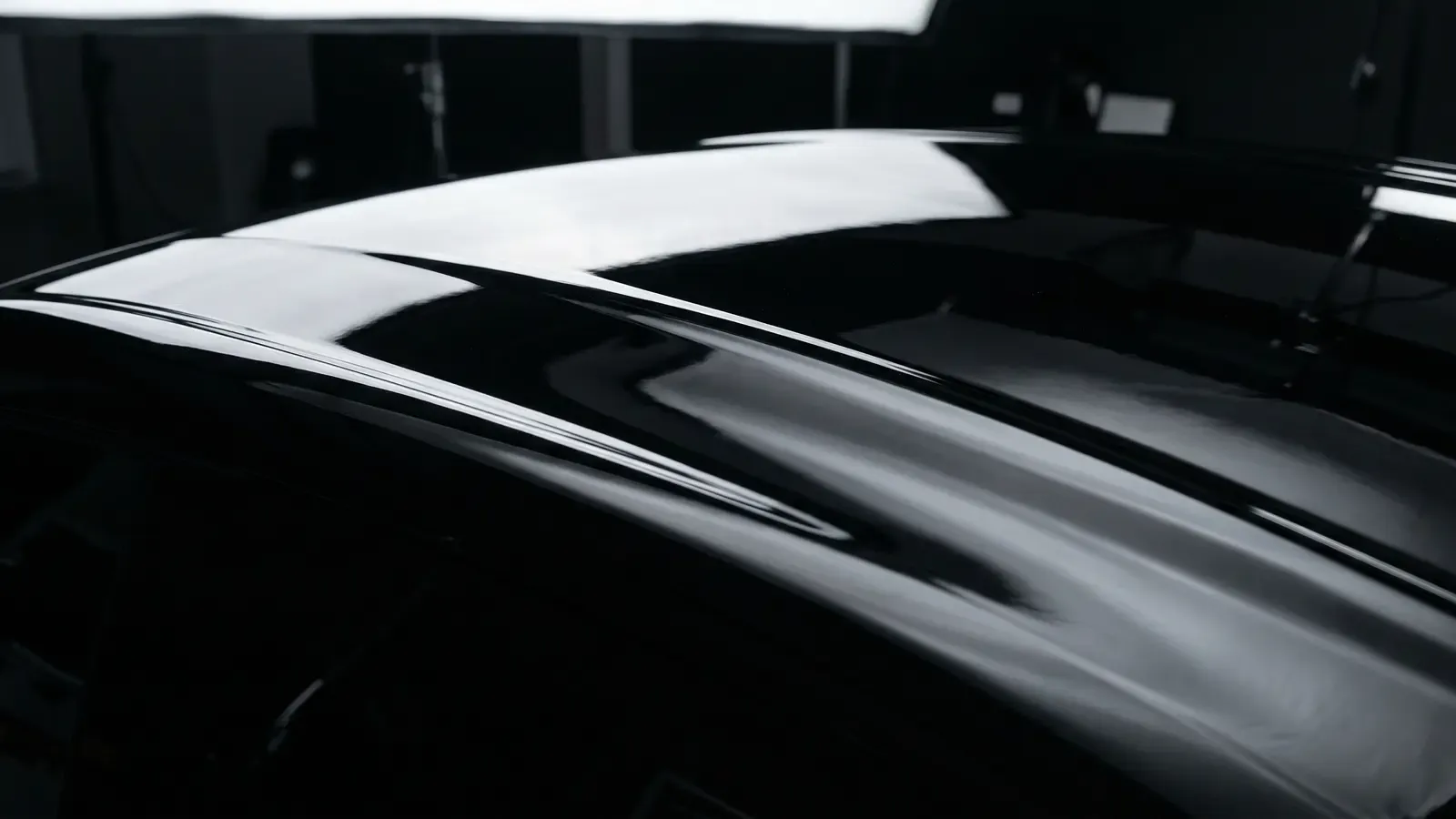
The closest to factory paint. High reflectivity, deep color saturation, and a wet-look shine. Gloss wraps are the most popular choice because they look familiar and pair well with virtually any color.
Best for: Classic colors (black, white, blue, red), daily drivers, and anyone who wants a clean OEM-plus look.
Matte
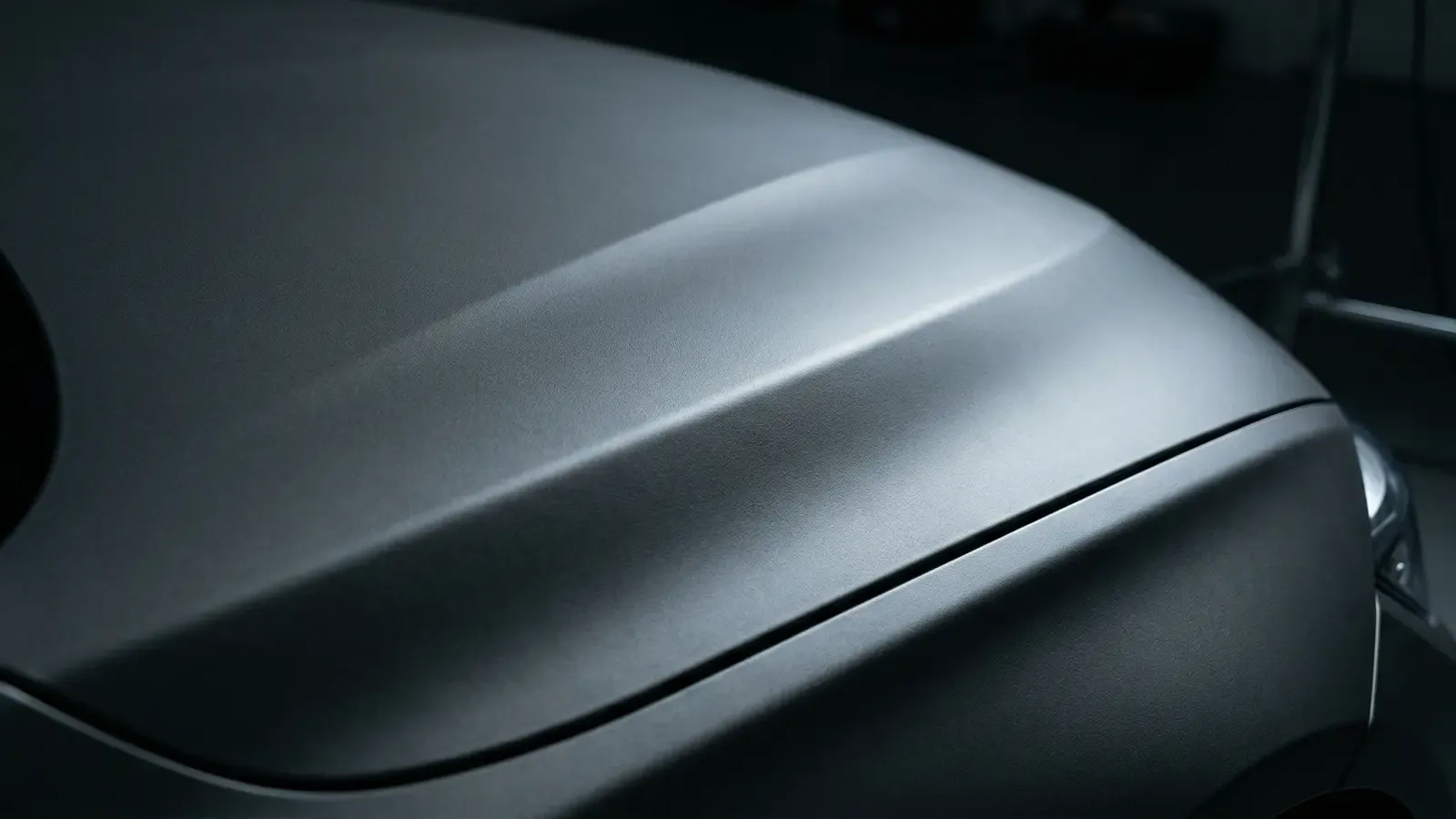
Flat, non-reflective surface that absorbs light instead of bouncing it back. Matte wraps give vehicles a stealth, aggressive appearance that’s impossible to achieve with traditional paint without a very expensive flat clear coat.
Best for: Dark colors (matte black, matte charcoal, matte military green), performance vehicles, and modern/minimalist aesthetics.
Satin
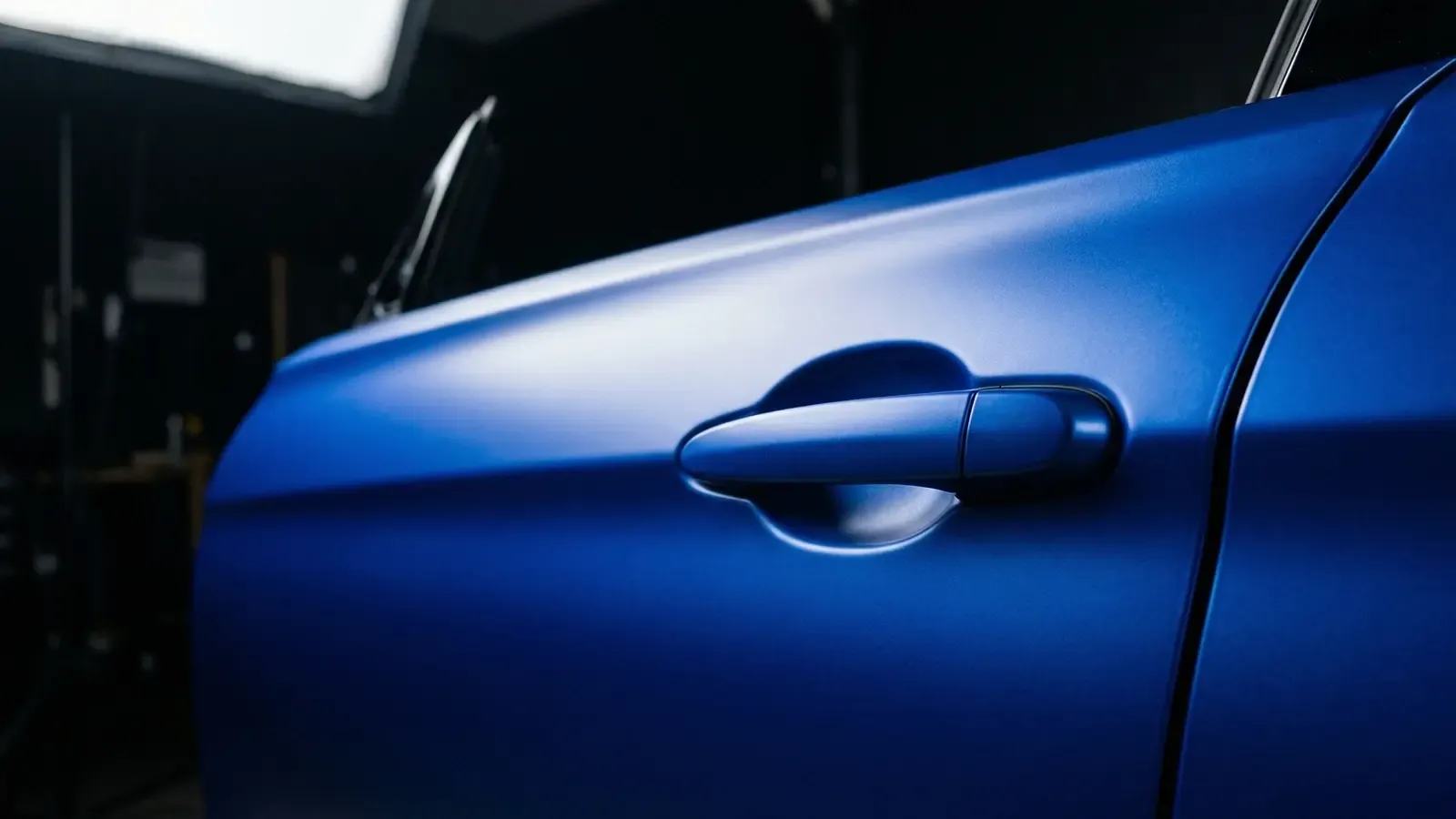
The middle ground between gloss and matte. Satin finishes have a soft sheen. They reflect light, but diffuse it rather than producing sharp reflections. Think of it as a “brushed” look.
Best for: Luxury vehicles, neutral tones (satin white, satin gray, satin dark blue), and owners who want something distinctive without going full matte.
Color-Shift and Specialty Films
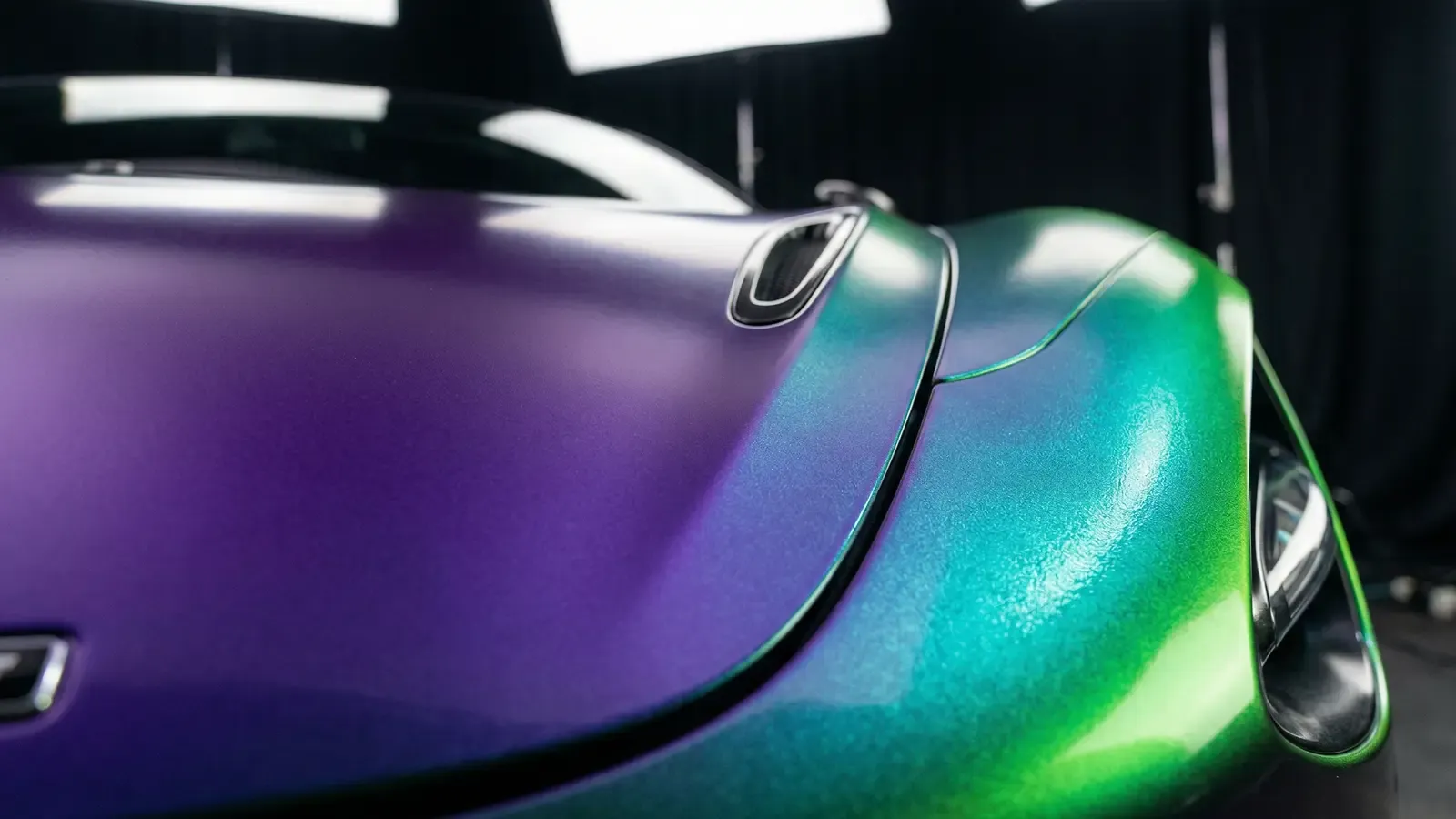
Chameleon wraps that change color depending on the viewing angle and lighting. These are statement pieces. They draw attention and create a vehicle that looks different every time you see it.
Best for: Show cars, weekend builds, and owners who want maximum visual impact.
Brushed Metal and Textured Films
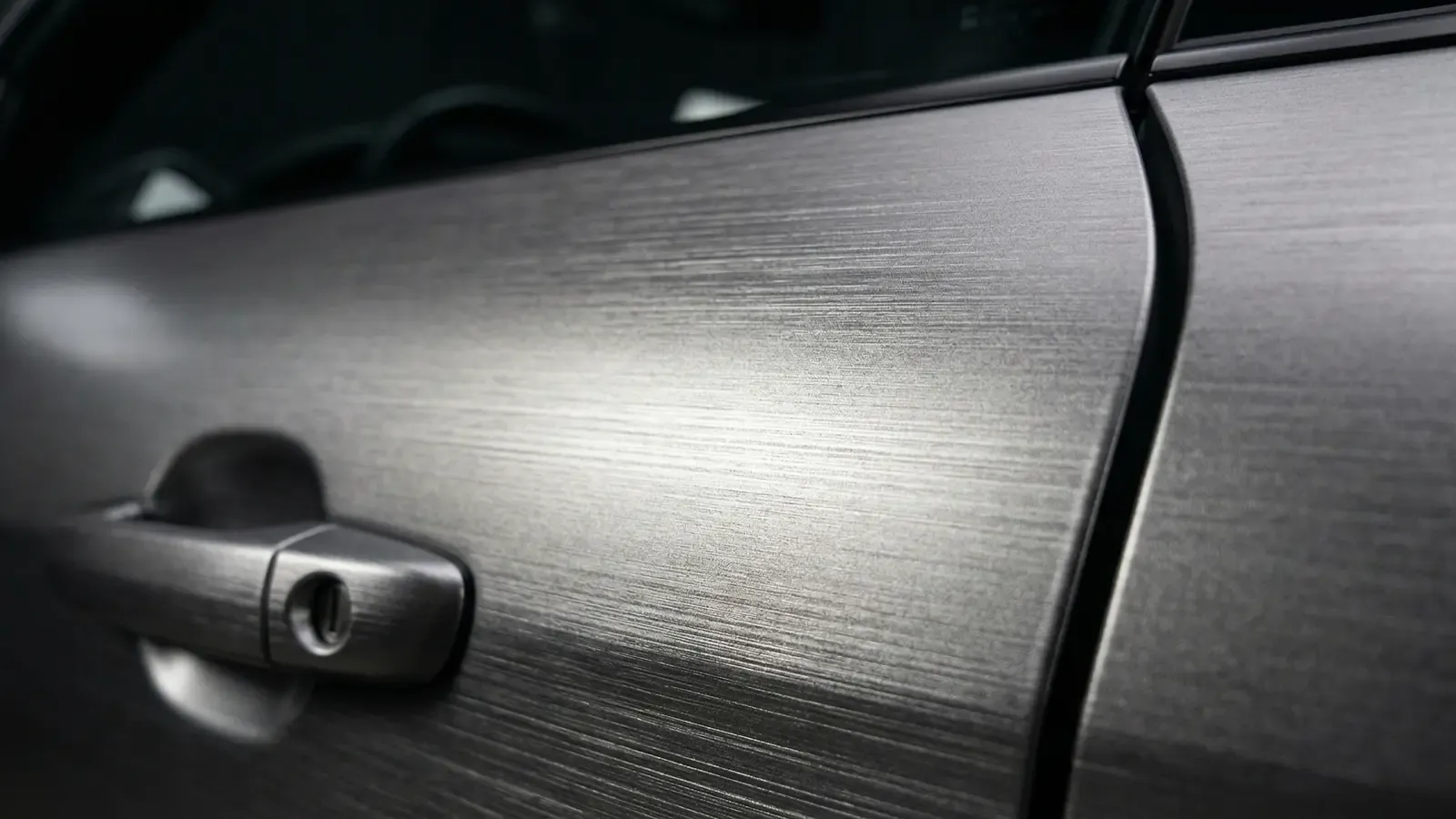
Simulated metal textures: brushed aluminum, brushed steel, carbon fiber. These work best as accent wraps (roof, mirrors, trim) rather than full-body applications.
Best for: Accent panels, interior trim pieces, and complementing a primary wrap or paint color.
How to Choose Your Color
Start With Your Vehicle’s Shape
Color interacts with body lines differently:
- Light colors (white, silver, light blue) make vehicles look larger and emphasize curves
- Dark colors (black, dark gray, navy) make vehicles look more compact and sharpen edges
- Warm colors (red, orange, gold) draw attention to the front and sides
- Cool colors (blue, green, purple) create depth and make surfaces look recessed
Consider Your Daily Environment
This is practical, not just aesthetic:
- Light-colored wraps show dirt and road grime more quickly but hide minor scratches
- Dark wraps hide dirt better but show swirl marks and dust
- Matte and satin finishes require specific wash products (no wax, no glaze)
- Gloss finishes are the easiest to maintain with standard wash methods
Think About Resale
If you plan to sell or trade the vehicle, keep this in mind:
- Wraps are fully removable, so they don’t affect the paint underneath
- Neutral colors (black, white, gray, dark blue) appeal to the widest audience
- Bold colors (lime green, bright purple, chrome) are polarizing. Great if you love them, but they limit your buyer pool if you sell with the wrap on.
Popular Combinations We Install
Based on what we see most at the studio:
- Satin Black on German Sedans: Clean, aggressive, timeless
- Gloss Nardo Gray on Sports Cars: The Audi-inspired gray that works on everything
- Matte Military Green on Trucks and SUVs: Rugged without being loud
- Satin Dark Blue on Luxury Sedans: Sophisticated alternative to black
- Color-Shift Purple/Teal on Show Builds: When subtlety isn’t the goal
How Long Does a Vinyl Wrap Last?
With proper care:
- Premium cast vinyl (3M, Avery Dennison, Inozetek): 5–7 years
- Calendar vinyl (budget films): 2–3 years
- Specialty films (chrome, color-shift): 3–5 years
Longevity depends on exposure to UV, how the vehicle is stored, and whether you follow the correct maintenance routine. We only use premium cast films at Revibe. The quality difference is worth it.
Next Steps
If you’re considering a wrap but can’t decide on color, that’s exactly what consultations are for. We can show you physical swatches, mock up options on your vehicle, and help you narrow down the choice before any material gets cut.
Frequently Asked Questions
Does a vinyl wrap damage the original paint?
No. A professionally installed vinyl wrap protects the original paint by acting as a removable barrier. The factory paint underneath stays in its original condition for the full lifespan of the wrap. When the wrap is eventually removed, the paint typically looks better than equivalent unwrapped panels because it has been shielded from UV and contaminants.
Can a vinyl wrap be removed if I change my mind?
Yes. Vinyl wraps are designed to be fully removable. Professional removal uses controlled heat to lift the film without leaving residue, typically taking a day on a full vehicle. The original paint is exposed in its untouched factory state. This reversibility is one of the main reasons drivers choose wraps over repainting.
How long does it take to wrap a car?
A full-vehicle vinyl wrap typically takes 3 to 5 days of studio time. The work breakdown includes panel disassembly, surface preparation, precise film cutting and application, heat-shaping on curves, edge-wrapping, and reassembly. Partial wraps (roof, hood, accents) finish in 1 to 2 days depending on scope.
Will a vinyl wrap look like factory paint?
A quality gloss wrap looks remarkably close to factory paint at normal viewing distances. Premium cast films like 3M, Avery Dennison, and Inozetek match the depth, finish, and reflectivity of OEM paint with most colors. Matte, satin, and specialty finishes look intentionally different by design and are not meant to mimic factory paint.
Are matte and satin wraps harder to maintain than gloss?
Yes. Matte and satin finishes require specific wash products and techniques. Wax, polish, and many traditional detail products will permanently alter the texture or add unwanted sheen. Hand wash with matte-safe shampoo, avoid automatic car washes with brushes, and skip any product labeled 'polish' or 'wax'.
Can a damaged section of vinyl wrap be repaired?
Yes. Individual damaged panels can be re-wrapped without replacing the entire vehicle's film. The shop matches the existing color batch as closely as possible. Slight color variation between original and replacement panels is normal because vinyl ages with UV exposure. More recent installs are easier to spot-repair than older ones.